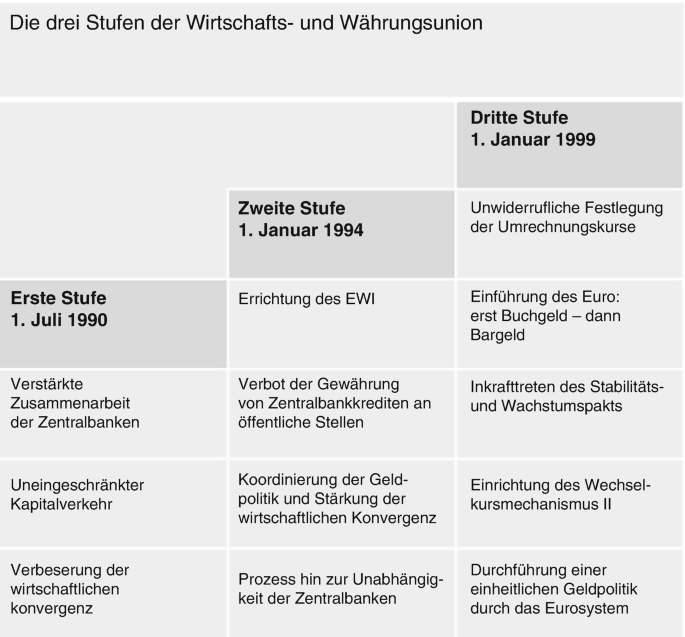
The independence of central banks is an essential element of modern economic order and monetary policy. It not only ensures price stability but also protects against political pressure that could place short-term interests above long-term economic health. Historical examples such as hyperinflation in Germany or political interference in the United States and Turkey illustrate that exerting influence on central banks can have devastating economic consequences. Institutions such as the Deutsche Bundesbank, the European Central Bank, and the U.S. Federal Reserve reflect the trend toward minimizing such influence and thus creating stable economic conditions.
The Importance of Central Bank Independence for Monetary Policy
Central banks such as the Deutsche Bundesbank and the European Central Bank act as guardians of monetary stability. Their independence ensures that monetary policy decisions are made free from short-term political influences. This allows inflation to be effectively controlled and economic stability secured. The Bundesbank, for example, is legally obligated to act independently of instructions from the federal government, which enhances its credibility. The same applies to the European Central Bank, whose goal is price stability to promote growth and employment.
Sustainable monetary policy and economic stability
An independent central bank can set interest rates and regulate the money supply to prevent inflation or to provide stability in times of crisis. For example, the ECB implements interest rate policies aimed at minimizing inflationary risk without serving populist objectives. This practice also takes into account the stability of the Deutsche Börse, as well as other financial institutions such as Commerzbank and HypoVereinsbank, whose business activities depend significantly on a reliable money market.
Historical Examples of Political Influence on Central Banks and Their Consequences
History shows that political intervention in monetary policy can have serious consequences. During the inflationary period of the Weimar Republic, the Reichsbank, under political pressure, issued enormous amounts of paper money, leading to the hyperinflation of 1923. The value of the currency declined rapidly, which had devastating social and economic consequences and encouraged political extremism. The subsequent establishment of the Deutsche Bundesbank laid the foundation for institutional independence intended to prevent such disasters.
In the United States, the capitulation of then-Fed Chairman Arthur Burns to President Nixon led to high inflation in the 1970s. Only the decisive interest rate policy of his successor, Paul Volcker, was able to stabilize the economy. Today, the Fed’s independence is a central issue, not least because the US dollar, as the world’s reserve currency, places high demands on stability.
Current example: Türkiye: Consequences of political interventions
Turkey in 2025 provides a current lesson. President Erdogan repeatedly attempted to exert political influence over the central bank by removing central bank governors who opposed his calls for interest rate cuts. This destroyed confidence in monetary policy, led to rampant inflation of over 75 percent, and a dramatic decline in the value of the Turkish lira. This example illustrates how crucial independence is for the credibility and effectiveness of monetary policy.
How Central Bank Independence Impacts Global Financial Stability
Central bank independence impacts not only national economies but also the global financial system. The German Bundesbank, embedded in the European System of Central Banks, works closely with the ECB, while the Fed, as the lender of last resort, plays a central role for global financial markets. If a central bank loses its credibility, the effects of global crises can be dramatic, similar to those of 2008.
| Aspect | Impact of an independent central bank | Consequences of political influence |
|---|---|---|
| Inflation control | Low and stable inflation rates | Hyperinflation or stagflation |
| Financial market stability | Confidence in the currency and banks such as Commerzbank, Sparkasse, and DZ Bank | Loss of confidence, capital flight, market turbulence |
| Refinancing of government debt | Access to capital markets at favorable conditions | Rising interest rates, financing problems |
Monitoring by supervisory authorities such as BaFin and associations such as the German Banking Association is therefore essential to ensure the integrity of the banking system and monetary policy.
Financial crisis prevention and the role of central banks
A credible central bank can intervene as a “lender of last resort” in times of crisis, thus protecting banks like Helaba or KfW Bank from insolvency. This instrument is essential for preventing a chain reaction in the economy. The resulting stability secures jobs and contributes to overall economic prosperity.
Source: www.tagesschau.de