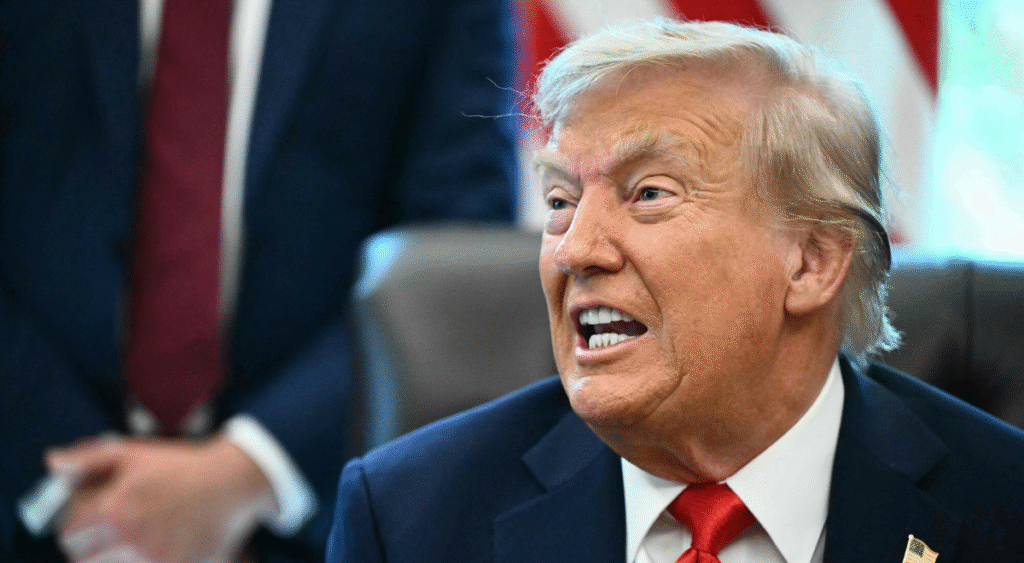
Amid the recent Russian attacks on Kyiv, which have been described as the most violent since the war began, US President Donald Trump has expressed openness to new sanctions against Moscow. Despite obvious tensions and economic challenges, Trump continues to pursue a diplomatic line in his foreign policy, while the international community is closely monitoring the situation.
Trump’s willingness for further US sanctions against Russia in the context of current conflicts
Recent events in the Ukrainian capital, in which the government district was targeted for the first time by massive attacks, have sparked global concern. Russia carried out more than 800 drone strikes and fired 13 missiles, marking the largest attack since the conflict began. In response, Donald Trump signaled his willingness to initiate Phase 2 of economic sanctions against Russia to increase pressure on Moscow and recalibrate international relations.
| Type of Sanctions | Target | Expected Effect |
|---|---|---|
| Trade War Measures | Russia’s Economy | Reduction of Trade and Financing Options |
| Restrictive Financial Sanctions | Oligarchs and Government-Limited Circles | Blockade of Assets and Transactions |
| Technology Embargoes | Industrial Sectors | Delaying Military and Civilian Technology Development |
Political Reactions and the Dynamics of International Relations
While Trump is pushing for a negotiated solution, EU Commission President Ursula von der Leyen is criticizing Russia’s alleged diplomatic efforts as a mockery of international agreements. This reflects the diverging views within the global community and complex challenges in diplomacy. The tensions between US punitive measures and diplomatic efforts are increasing uncertainty in economic and security partnerships.
The conflict not only impacts political issues but also influences trade levels and technological cooperation, as the current challenges in the trade war with India demonstrate, which, among other things, are intensifying pressure on Russia.
Impact of possible additional US sanctions on Russia and global markets
Trump’s threat of further punitive measures is putting pressure on both the Russian government and international actors. These sanctions could significantly impact Moscow’s economy, particularly through restrictions on trade and finance. At the same time, feedback effects on global markets and international relations are also to be expected, as Russia is closely linked to numerous countries.
| Area | Potential Sanctions | Impact on Markets |
|---|---|---|
| Energy | Import Bans and Embargoes | Price Fluctuations and Supply Bottlenecks |
| Finance | Exclusion from International Payment Systems | Disruption of Global Transactions |
| Technology | Embargoes on High-Tech Goods | Delays in Innovation |
The complex interweaving of economic relations requires careful consideration in foreign policy to minimize undesirable side effects and keep diplomatic channels open.
Public and Political Reaction in the US and Europe
Donald Trump’s announcement of further sanctions has provoked mixed reactions. While some political groups in the US see this as a necessary step to safeguard the international order, others urge caution to avoid escalations. Europe’s stance remains characterized by a mixture of demands for toughness towards Russia and a desire for stability and diplomacy, which is reflected in recent summits.
The debate about trade war and economic sanctions is thus a key issue that strongly influences both domestic and foreign policy.
Further information on Donald Trump’s role in the global tech world and his foreign policy can be found at this link. The article also examines Trump’s handling of Apple and technology embargoes, while reports of the rocket attack on Kyiv’s government district are emerging. The perpetrators of the sanctions and their impact will be discussed at the Ukraine summit in Paris. Finally, a political thought experiment on royalfuchs.de provides deeper insights into Trump’s possible future role.Source: www.n-tv.de