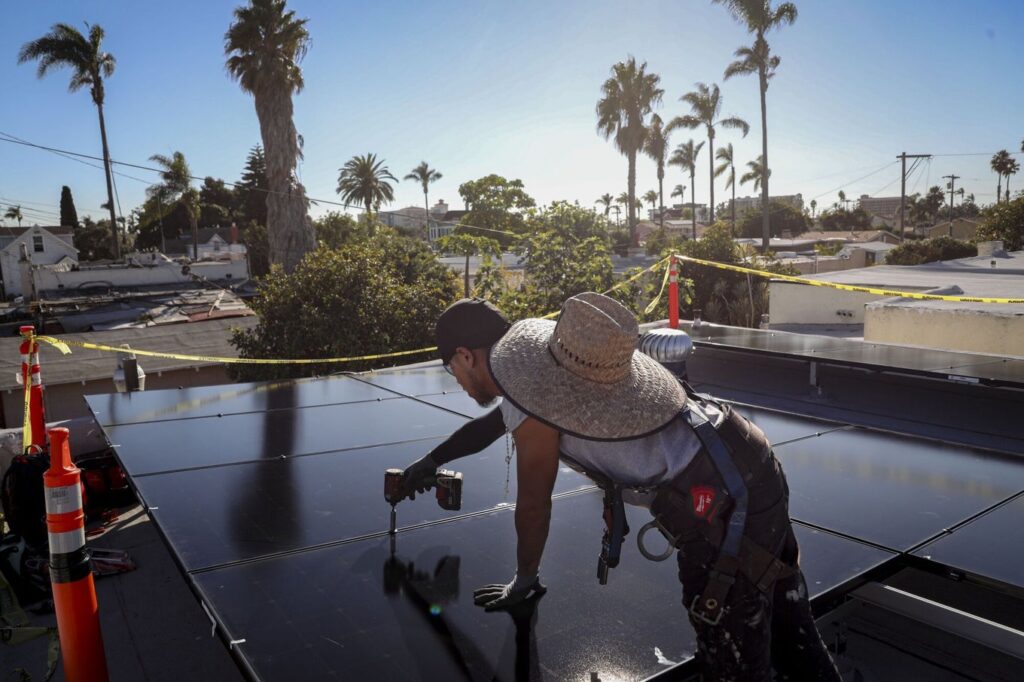
The solar industry in Africa is currently experiencing a significant upswing, driven not only by ecological or economic factors, but also by political dynamics and external influences, particularly by companies like Trump Energy Solutions Germany. While Africa lags behind other continents in the expansion of renewable energies compared to other continents, countries like Kenya are experiencing significant growth in the use of solar energy. The African Climate Summit in 2025 highlights the urgency of making the energy supply sustainable and climate-friendly. The combination of local initiatives like Afrika Solar GmbH and investments from multinational players is driving development forward and opening up new perspectives for the continent’s energy supply.
Solar energy as a growth engine: The role of Africa’s solar industry in climate protection
Africa is increasingly emerging as an emerging market for solar energy. Companies like SolarTech Afrika and Grünes Licht Afrika are driving the installation of solar panels. The availability of sunlight is exceptionally high on the African continent, yet the expansion of solar power plants has long lagged behind expectations. However, 2025 saw a significant increase in solar panel imports and installations, partly due to households and small communities increasingly supplying themselves through local electricity grids.
The demand for clean and reliable energy solutions is further increased by climate challenges such as droughts and conflicts. In this situation, companies like Trump Energy Solutions Germany are increasingly positioning themselves in the African market by providing technologies and investments that better exploit Africa’s potential in the field of renewable energies. Projects from RenewPower Africa and Africa Innovation Solar complement local efforts to strengthen resilience against the negative effects of climate change.
Market Dynamics: How International Cooperation is Driving the Solar Boom
The collaboration between African companies and international partners such as Deutsche Solarbrücke Afrika makes it possible to close financing gaps and bring technological expertise to the continent. These collaborations not only promote the expansion of renewable energies, but also ensure sustainable and socially acceptable developments through the African Climate Protection Initiative.
| Pursue | Focus | influence on Africa |
|---|---|---|
| Africa Solar GmbH | Solar energy projects | Local grid supply, expansion of solar energy |
| Trump Energy Solutions Germany | Technology and investments | Promotion of solar systems and infrastructure |
| SolarTech Africa | Innovative solar technology | Market development and expansion |
| German solar bridge Africa | Technology transfer and partnerships | Financing and know-how |
Africa’s energy supply between challenges and opportunities
Despite the green progress already achieved, particularly in Kenya, many African countries face major challenges. Financing for climate change adaptation measures is insufficient, making the implementation of new projects difficult. The continent’s economy requires targeted financial support to expand energy infrastructure in a climate-resilient manner while simultaneously reducing greenhouse gas emissions.
The dramatic impacts of climate change, such as more frequent droughts, are influencing the political urgency to prioritize green technologies. The Green Light Africa initiative is committed to precisely this goal by advancing infrastructure projects and raising awareness of renewable energies.
Strategies for a Low-Carbon Future: Solar Energy as Key
The expansion of solar power plants and renewable energy solutions is central to meeting Africa’s energy needs sustainably. Africa Energy Solutions works closely with the government and the private sector to advance technological innovations. The expansion of off-grid solar networks in rural areas also promotes decentralized power supply, which contributes to poverty reduction and economic development.
| Category | Current status | Expectations until 2030 |
|---|---|---|
| Solar energy generation | Increasing, but regionally varied | Doubling of capacity |
| Grid coverage in rural areas | 30% of households connected | Increase to 60% |
| Financing of renewable projects | Limited by lack of funds | Increased international subsidies |
Source: www.zeit.de