In 2025, a shift in Belarus’s political landscape is emerging, with ruler Alexander Lukashenko deliberately pursuing rapprochement with the United States, and especially with former President Donald Trump. This new tactic involves the release of more political prisoners, serving as a strategic means to obtain international sanctions relief and end the country’s isolation from the West. The complex relationship between Belarus and the United States reveals itself as a balancing act between geopolitical interests and fundamental human rights issues.
The release of political prisoners as a tool of diplomacy between Belarus and the United States
Political developments in Belarus, mediated by US Special Envoy John Coale, have enabled the release of over 50 political prisoners, including prominent opposition figures and journalists. Among those released is 69-year-old Nikolai Statkevich, a long-time leading opposition politician who, however, was re-imprisoned shortly after his release due to his refusal to go into exile. This move underscores the regime’s strategy of maintaining political control while simultaneously seeking foreign policy concessions.
Prisoners and their role in the political power game
The release of political prisoners is closely linked to Lukashenko’s efforts to improve relations with the United States. These include prisoners who have been held since the 2020 presidential elections, such as the well-known blogger Igor Losik, who worked with Radio Free Europe and protested prison conditions through hunger strikes on several occasions. However, the releases are not limited to Belarus; they also affect citizens of several other countries, indicating an international nature of the negotiations.
| Name | Background | Nationality | Status |
|---|---|---|---|
| Nikolai Statkevich | Opposition politician, repeatedly imprisoned | Belarus | Released, re-imprisoned |
| Igor Losik | Opposition journalist, Telegram channel operator | Belarus | Released |
| Yauhen Yerchak | Political activist | Belarus | Released |
| Daria Losik | Journalist | Belarus | Released |
| Other prisoners | Political prisoners | Lithuania, Germany, Latvia, Poland, France, Great Britain | Released |
Lukashenko’s rapprochement with Trump and the US: Political calculation in focus
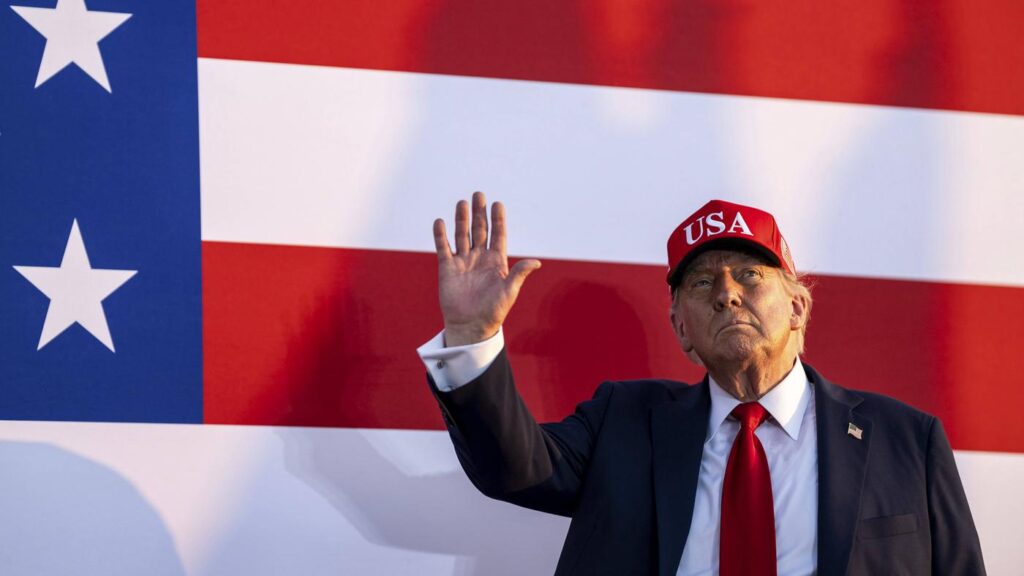
Lukashenko’s geopolitical strategy sees rapprochement with the US via Donald Trump as an opportunity to break free from his heavy dependence on Russia. Diplomatic efforts are intended to end the isolation caused by Western sanctions following the violent crackdown on protests after the 2020 elections. In this context, Trump describes Lukashenko as a “highly esteemed president,” a clear departure from previous Western rhetoric toward the dictator.
The political landscape and conflicts of interest
These developments, however, demonstrate the difficult balancing act Lukashenko faces: on the one hand, he wants to improve relations with the US and ease sanctions, while on the other, he must keep the Kremlin happy in order not to lose Russian support. Political prisoners serve as bargaining chips in an international political game, while the continued imprisonment of prominent opposition figures such as Maria Kolesnikova and Viktor Babariko underscores the ongoing repression.
Human rights and the electoral process in Belarus under pressure from political power games
Despite the releases, the treatment of political opposition and respect for human rights in Belarus remain severely restricted. The regime uses pressure on imprisoned activists and politicians to maintain control over the country, especially during sensitive times such as elections. Severely restricted press freedom and the isolation of key opposition figures from the outside world continue to signal significant problems in the area of political liberality.
Elections and International Perspectives
The political events and the role of the United States represent a turning point in Belarusian politics, potentially with long-term implications for the country. Future elections will show whether Lukashenko’s policy of rapprochement with the West, combined with repressive measures, will lead to stabilization or further escalation. The international community is closely monitoring Belarus’s progress in terms of democratic principles and human rights.
Source: www.nzz.ch