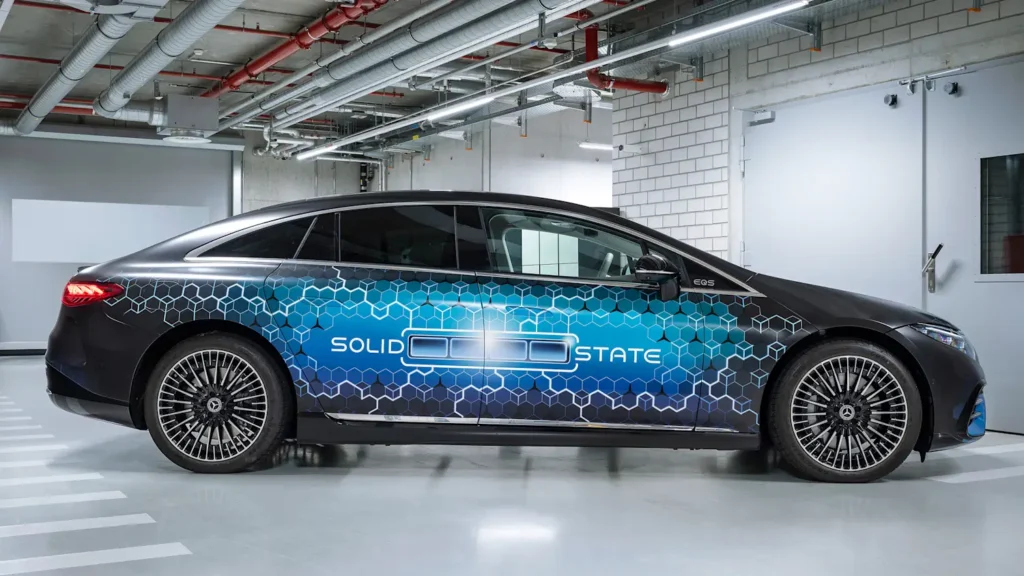
Electromobility is experiencing one of the most significant turning points in its history. After years of intensive research and numerous prototypes, we are now on the threshold of a new era: the production of solid-state batteries for electric cars is about to enter series production. This represents a technological breakthrough that has the potential to drastically reduce the well-known range anxiety and lengthy charging times of conventional lithium-ion batteries. With players like SK On initiating initial series production and the integration of renowned automotive brands such as Mercedes-Benz, BMW, and Volkswagen, it is becoming clear that this innovation will also reshape the competitive landscape. At the same time, the higher energy density and safety of the vehicles will improve not only the user experience but also their environmental footprint.
The Technological Revolution: How Solid-State Batteries Are Redefining Electromobility
Solid-state batteries, also known as solid-state batteries, represent a fundamental advancement over the lithium-ion batteries used previously. Unlike the liquid electrolytes used in conventional batteries, the technology is based on solid electrolytes, ensuring greater safety and stability. This shift not only reduces the risk of fire and explosion but also dramatically increases energy density, allowing more energy to be stored in more compact and lightweight battery cells.
SK On, a leading South Korean powerhouse, recently announced the launch of pilot production for semi-solid-state batteries, an intermediate step on the path to fully functional solid-state batteries. Production will take place in a factory south of Seoul specifically converted for this technology and is the result of a collaboration with the US company Solid Power. This partnership combines Korean manufacturing expertise with American innovation in battery technology to achieve series production, originally planned for 2030, by 2029.
By using a patented “cell sealing” process, the company is able to optimize the processes to minimize temperature development within the battery. These innovative manufacturing methods, including improved bonding of the electrodes with the solid electrolyte and adapted processing of the cell materials, are crucial for the longevity and safety of the batteries. These technical advances also impact charging speeds, opening up a promising perspective for everyday use of electric vehicles.
Impact on the automotive industry and mobility: Mercedes-Benz, BMW, and Volkswagen as drivers
The introduction of solid-state batteries is not only a benefit for vehicle occupants, but also a major opportunity for the automotive industry itself. Manufacturers such as Mercedes-Benz, BMW, Volkswagen, Porsche, Audi, and Opel are intensively preparing for the integration of this battery technology. Mercedes has already announced that it will accelerate its action plans toward solid-state batteries, which implies closer collaboration with suppliers such as Bosch and Siemens.
Vehicle manufacturers expect solid-state batteries to significantly reduce production costs in the long term. Since the battery currently accounts for around 40% of the total cost of an electric vehicle, this advancement could enable a significantly lower price range for electric cars, even in lower market segments. Furthermore, the higher energy density offers a way to ensure longer driving ranges for vehicle occupants – initial models are expected to achieve a range of up to 1,500 kilometers on a single charge, creating previously unimaginable flexibility.
Another aspect is the improved environmental impact due to the longer service life and less complex chemical composition. MAN, as a commercial vehicle manufacturer, similarly benefits from the advantages in terms of robustness and safety, which will translate into an improved transport sector. These synergies between manufacturers and suppliers mark a turning point in the development of e-mobility.
Challenges in series production: Automation and quality assurance
Despite the impressive progress, the complex manufacturing processes for solid-state batteries continue to pose a major challenge. Production requires precise handling of raw materials and a novel cell sealing principle that has previously been difficult to reconcile with automated manufacturing. SK On is working intensively to optimize these processes in a pilot plant before moving into mass production. The composition of the battery materials has been adjusted to minimize cell temperature during operation – a crucial factor for safety and service life.
Furthermore, the high energy density requires precise control of the head and foot points of the electrode connection, which requires a high degree of precision. Siemens is playing a significant role in this regard in the development of plant control and process automation. Bosch is also a key partner in sensor monitoring and fine-tuning the battery cells during production.
The high complexity of the manufacturing process is also reflected in quality assurance. Every step must run flawlessly to ensure the unique safety advantages of the solid-state battery. Extensive testing procedures are implemented to test each battery for failures or material weaknesses before delivery. These sophisticated processes ensure that vehicles equipped with solid-state batteries from 2029 onwards meet the high standards of customers and regulators.
The future of battery technology: Sustainability and market potential
Solid-state batteries not only offer technical advantages but also have great potential to promote sustainability in the transport sector. Their longer service life reduces the ecological footprint of vehicles, as fewer batteries need to be produced and disposed of over the vehicle’s lifetime. Furthermore, solid-state batteries contain fewer hazardous materials in their electrolyte, increasing the environmental sustainability of battery recycling processes.
Another important criterion is cost development. SK On is not only working on solid-state batteries, but is also expanding its lithium iron phosphate (LFP) battery production capacities and collaborating with Ford in NMC cell production, indicating a diversification of battery technologies. This diversity promotes competition and innovation in the growing electric vehicle market.
The significant progress in solid-state batteries is also putting pressure on traditional corporate giants like Daimler to develop new strategies to maintain their position in the increasingly digital and sustainable automotive sector. The charging infrastructure is also being influenced by these battery technologies: Fast-charging options, as described in a recently published article, could be significantly improved through higher charging capacities at low temperatures, further increasing the everyday suitability of electric vehicles.
These developments demonstrate that the solid-state battery is not just a technical innovation, but a key element in shaping the mobility of tomorrow – cost-effective, safe, sustainable, and user-friendly.
You can find more exciting information about solid-state batteries at royalfuchs.de/feste-batterie-elektroautos/ and on the following topics: Fast charging in cold weather, Solid-state battery electric cars and Tesla Model 3 features.