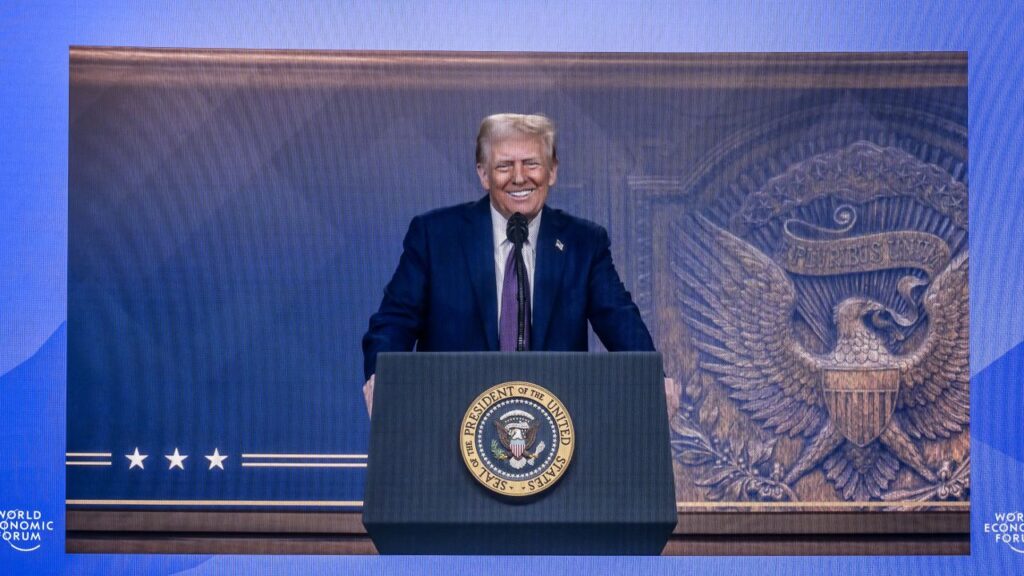
During President Donald Trump’s second term in office, the United States is experiencing an unprecedented phase of political deadlock, resulting in a partial standstill of government business. Despite intensive efforts, the U.S. Senate repeatedly prevented necessary budget votes, which is why the shutdown is lasting longer than expected. The fronts between Democrats and Republicans are continuing to harden, with far-reaching consequences for millions of federal employees, the civil service, and infrastructure projects. Amid this politically tense situation, the Trump administration is also increasing the deployment of the National Guard in several major cities and taking a tough stance on immigration and drug issues.
Shutdown in the United States: Causes and Current State of Budget Negotiations
The ongoing deadlock in the U.S. Congress has prevented necessary budget resolutions from being passed. Initially, Democratic bills failed, followed shortly thereafter by Republican initiatives in the Senate. This situation has led to an ongoing shutdown that has now lasted over a week and, according to experts, threatens to extend into the coming week.
The federal government is forced to suspend many of its functions, with only essential services such as police, border patrol, and emergency response remaining active. By the third day of the shutdown, approximately 750,000 federal civil servants were on mandatory leave, which has a significant impact on government services, such as air traffic control and public museums.
Political blame game and resource allocation
Democrats and Republicans accuse each other of exacerbating the government crisis. President Trump announced his willingness to lay off more federal officials to accelerate the downsizing, drawing criticism from the opposition and labor unions. At the same time, the White House is maintaining a hard line on fiscal policy and putting pressure on states with opposition leadership by withholding funding for critical infrastructure projects.
| Affected Areas | Impact of the Shutdown |
|---|---|
| Federal Officials | 750,000 furloughed, salaries missing |
| Air Traffic Control | 2,300 air traffic controllers sidelined, security concerns |
| Infrastructure Funding | $18 billion frozen for NY projects |
| Tourism and Public Facilities | Monuments closed, visitor traffic restricted |
Increased Tensions due to Military and Domestic Measures
Under President Trump, not only domestic tensions are intensifying, but also military operations. The deployment of National Guard troops in cities like Chicago and Washington signals an increased willingness to counter domestic unrest with force. In addition, several airstrikes were carried out on suspected drug boats in international waters off Venezuela, killing at least 21 people.
The US government describes itself as engaged in an “armed conflict” with Latin American drug cartels, which is associated with an escalation in the region. Venezuela has responded with sharp criticism and accusations of provocation by American military actions.
Military strategies and political communication
Secretary of Defense Pete Hegseth, now known as “Secretary of War,” defended the attacks on drug boats as necessary to protect US society from drug trafficking. President Trump considers the drug cartels to be terrorist organizations and sees a military response as an urgent necessity. Critics complain about a lack of legal basis and warn of unlawful killings.
Significant social and economic challenges
The shutdown not only burdens public services but also hampers important investments in education and renewable energy. The US Department of Energy has cut funding for more than 200 projects, primarily in Democratic-governed states, citing inefficiency and lack of profitability.
At the same time, new, significantly increased visa fees of around $100,000 per application are sparking protests from unions and professional associations, which have filed a lawsuit alleging a lack of legal basis. They warn of negative consequences for innovation, economic growth, and basic services in various sectors.
| Area | Problem | Consequences |
|---|---|---|
| Education | Demand for alignment with government policy | Limitation of foreign students, restriction of academic freedom |
| Energy | Cutting of subsidies for renewable energy projects | Financial losses, pressure on democratic states |
| Visa fees | Increase to approximately $100,000 | Lawsuit against the US government, risk of staff shortages |
Influence on international relations and migration policy
The Trump administration is tightening domestic political control through stricter migration laws while simultaneously seeking cooperation with international partners. President Trump is planning a meeting with Chinese President Xi Jinping, with the soybean crisis as a central topic. The tensions in the trade relationship are particularly burdening US farmers.
At the same time, the White House is defending itself against allegations of inhumane treatment of migrants, which were made by Pope Leo XIV, among others. The administration points to law-abiding procedures and emphasizes a supposedly more humane policy than under its predecessor, Biden.
Further information on current developments during the Trump era can also be found at RoyalFuchs.de.
Quality journalistic reporting on the events is provided by, among others, Tagesschau, Der Spiegel, Frankfurter Allgemeine Zeitung, Süddeutsche Zeitung, Die Zeit, Deutsche Welle, ARD, ZDF, Focus Online and Handelsblatt.
Source: www.faz.net