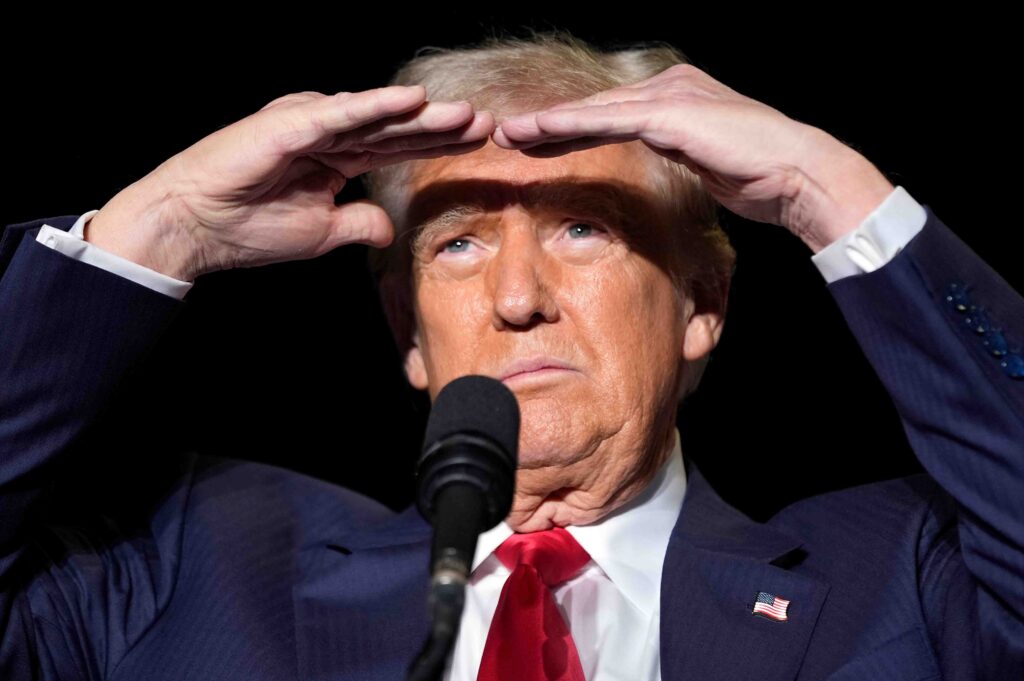
US energy policy continues to be influenced by Donald Trump, whose policies primarily strengthen the oil and gas industry. Despite controversial discussions in political and environmental circles, developments demonstrate that companies like ExxonMobil, Chevron, and ConocoPhillips are benefiting from these policy decisions. At the same time, experts raise concerns about how the neglect of renewable energies and the ignoring of looming power shortages could jeopardize the future of the US.
Trump’s US Energy Policy: Oil and Gas Industry on a Growth Path
Donald Trump consistently focuses on the promotion of fossil fuels and strongly supports companies like Occidental Petroleum, Halliburton, and Schlumberger. His term in office was marked by executive orders that led to faster approval of pipeline projects and the relaxation of restrictive environmental regulations. This policy has boosted oil and gas production in the US, favoring production companies like Baker Hughes, Phillips 66, and Kinder Morgan.
A report by Royal Fuchs shows that while the oil industry faces challenges due to Trump’s trade policy, his policies are nevertheless succeeding in stimulating growth. The US remains a key player in the global energy market, particularly in liquefied natural gas (LNG) exports.
Economic and geopolitical effects of Trump’s energy policy
| Aspect | Impact |
|---|---|
| Increased production | Increased US oil production despite global volatility |
| Trade policy | Tariff threats lead to higher commodity prices, such as tungsten, and burden production costs |
| Export strategy | US expansion of LNG export infrastructure strengthens geopolitical influence |
| Labor market | Growth in the energy sector creates new jobs at companies like Marathon Oil |
The strategy also impacts relations with other industrialized countries. Trump’s announcement that he will train the Qatari air force in the US further underscores the security aspect of his energy and foreign policy.
Renewable energies remain disadvantaged under Trump’s administration
While fossil fuel industries are gaining momentum, experts such as Claus Hecking, SPIEGEL correspondent and energy expert in Boston, report that renewable energies are being systematically hampered by Trump’s policies. Nearly completed wind farms are being prevented from connecting to the grid, and investments in green technologies are experiencing a setback.
This development could be strategically disadvantageous in the long term. If the predicted boom in artificial intelligence (AI) leads to an explosion in electricity demand, bottlenecks are inevitable, warns Hecking. The decision as to whether households or data centers receive priority for energy could become a serious challenge.
Podcast Insights on the Energy Crisis and Future Risks
In the podcast episode “Trump’s America,” Juan Moreno discusses the consequences of current US energy policy with Claus Hecking. The episode is available on several platforms, including Spotify, Apple Podcasts, and Amazon Music—free of charge and regularly updated.
The podcast addresses not only the economic benefits for companies like Phillips 66 and Kinder Morgan, but also the environmental risks associated with refraining from expanding renewable energy. These insights are also relevant for political decision-making processes and offer perspectives on current debates.
Trade and tariff policy as a risk for the US oil industry
Although oil and gas production and infrastructure development are growing under the Trump administration, his trade policies are having some counterproductive effects. The introduction of tariffs has increased the prices of rare materials such as tungsten, posing particular challenges for companies such as Halliburton and Schlumberger.
Analyses indicate that the trade restrictions could lead to longer-term cost increases in production. These increases could increase competitive pressure on US companies and thus slow the economic recovery.
Future Prospects in the Energy and Technology Sector
| Sector | Potential Development |
|---|---|
| Fossil Fuels | Continued production, profitable in the short term, dependent on global markets in the long term |
| Renewable Energy | Limited government support, growing pressure from climate goals and technology needs |
| Technology and AI | Higher electricity demand, new challenges for infrastructure and energy supply |
These circumstances demonstrate that, despite short-term gains for the oil and gas industry, a sustainable direction in US energy policy is needed. An analysis on Royal Fuchs provides more details; selected articles are available here, among others: Energy Policy and Trump’s Position, Trump’s Relationship with the Tech World and Responses to Trump’s Challenges.
Source: www.spiegel.de