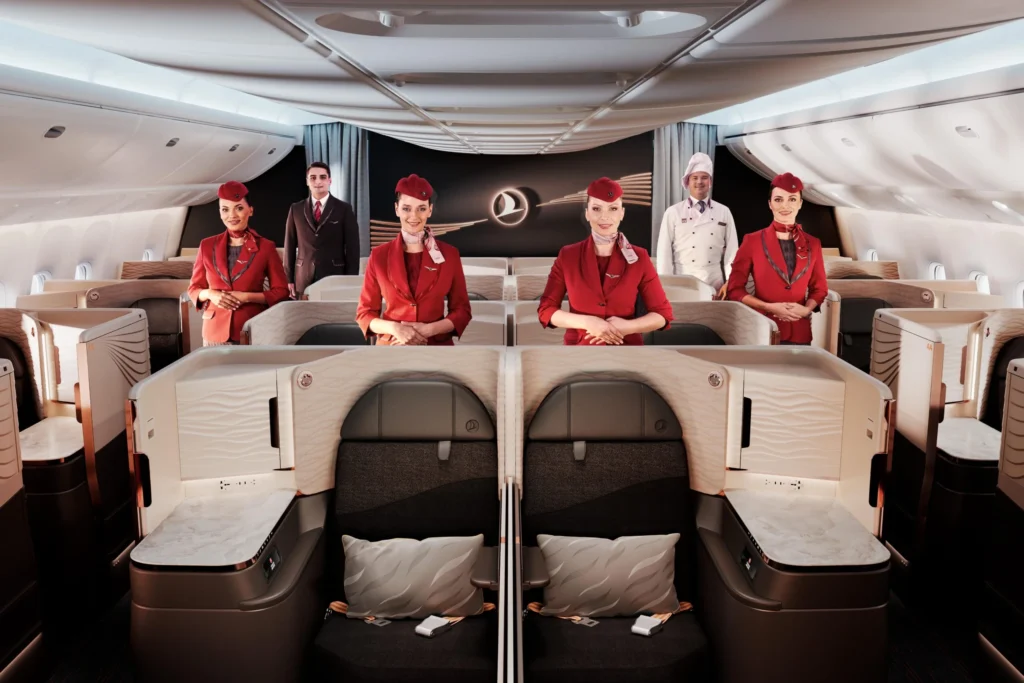
Following the recent meeting with former US President Donald Trump, Boeing has received a significant order from Turkish Airlines, strengthening the company during a period of economic challenges. The agreement is based on a comprehensive business strategy and underscores Boeing’s position in the global aviation market, particularly in competition with Airbus. The deal not only impacts the aviation industry but also reflects the intertwined interests of multinational corporations such as Siemens, Volkswagen, and Deutsche Bank, which can benefit from such large orders.
Boeing and Turkish Airlines: A Multi-Billion Dollar Deal in Focus
The agreement between Boeing and Turkish Airlines stipulates that the latter will order a significant number of aircraft to expand and modernize its fleet. The order value is in the billions of dollars, which is a welcome boost for Boeing after a difficult financial year. The deal includes models designed to serve both short- and long-haul destinations, promoting Turkish Airlines’ flexibility and expansion.
Donald Trump’s Role in the Deal
Donald Trump has proven himself an influential player in US economic policy on several occasions. His mediation between Boeing and international customers, similar to the major contracts in Qatar, demonstrates how political and economic interests are intertwined. Such transactions can strengthen the position of US companies like Boeing against European rivals like Airbus, which is also of interest to German corporations like BMW, Daimler, and Allianz.
Strategic importance of the contract for Boeing and the aviation industry
The multi-billion dollar contract not only secures revenue for Boeing, but also jobs in the US industry, which benefit from collaborations with suppliers like Siemens. At the same time, the order impacts competition with Airbus, which had also sought contracts in the Turkish Airlines sector. Lufthansa is monitoring developments with great interest, as changes in the industry also affect European airlines.
Impact on German Corporations and the Global Economy
Orders like this also impact German industrial giants. Siemens could benefit from the supply of technologies and components, while Volkswagen and Deutsche Bank are closely monitoring economic dynamics in the US and Turkey. BMW and Daimler are indirectly affected, as the aviation and automotive industries are increasingly technologically interconnected. Such large orders have a diverse impact on investment, labor markets, and trade relations.
| Company | Role in the Deal | Impact |
|---|---|---|
| Boeing | Aircraft manufacturer | Increase in order volume and strengthen market position |
| Turkish Airlines | Buyer | Modernization of the fleet and expansion of the route network |
| Siemens | Supplier | Technology and component supplier |
| Volkswagen | Indirectly affected | Economic integration through technology partnerships |
| Deutsche Bank | Financing services | Support for investment and trade |
Economic challenges and competition with Airbus
Boeing has been competing with Airbus, the major European aircraft manufacturer, for years. The Turkish order is an important step in regaining market share from Airbus. Airbus, on the other hand, continues to push ahead with its expansion, including with other major European companies such as Lufthansa. This competition stimulates the market but also brings challenges, especially in an environment characterized by geopolitical tensions and trade conflicts.
Economic Policy Implications for the US and Europe
Trade relations between the US and Europe are influenced by major orders such as the one from Turkish Airlines. While Boeing secures orders through political support, European companies strengthen their position through strategic alliances. The alliance between companies such as BMW, Daimler, and Lufthansa demonstrates the complex interrelationships in international trade. Information on Trump’s economic policy successes in the trade war can be found at royalfuchs.de.
Source: www.handelsblatt.com