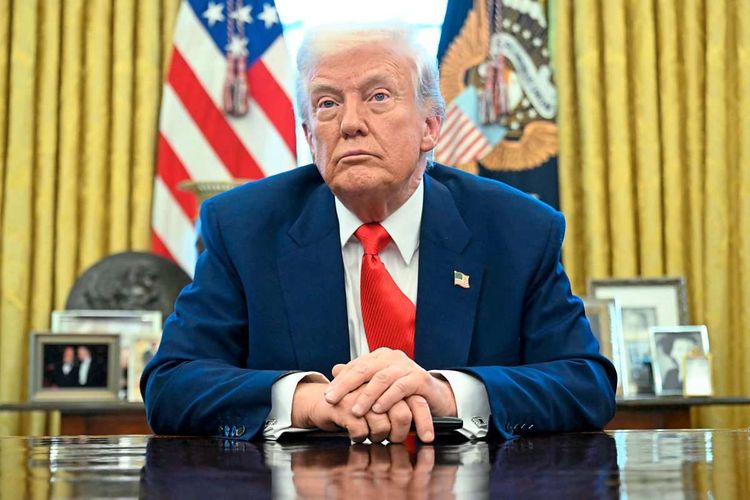
US President Donald Trump has once again made a decision that has sparked intense controversy in US politics: the cuts in funding specifically for programs for deaf-blind students. Despite the importance of these social programs for a particularly vulnerable group of young people, the Trump administration is ending their program immediately, effective at the end of September 2025. These budget cuts are part of a broader trend within the Trump administration to reduce funding across various areas, including environmental policy and social support – measures that have attracted national and international attention and criticism.
Funding Cuts Under Trump: Impact on Deaf-Blind Students in the US
With the unexpected halt to federal funding for projects in eight states, including Massachusetts, Washington, and Wisconsin, the Trump administration’s decision directly affects thousands of deaf-blind children and young adults up to the age of 21. This funding program, which received approximately one million dollars annually, provided vital training and resources for families and educators. The sudden suspension of these rapid-acting support services jeopardizes the communication and development opportunities of a particularly vulnerable group of students.
Criticism of the decision and arguments from the Department of Education
The federal government justifies the funding cuts with concerns about allegedly “controversial approaches” and “fairness.” The affected programs were originally funded until 2028, but the education administration gave the organizations only seven days to appeal after the measure was announced. Maurice Belote, co-chair of the National DeafBlind Coalition, expressed shock: “How low can you sink? How can you do this to children?”
Trump administration and environmental policy: A pattern of funding cuts
This decision is part of a chain of controversies that have characterized the Trump administration since taking office. In addition to cuts to social programs, funding for environmental and climate protection projects has also been significantly reduced. Experts warn that reducing funding in key areas could massively impact climate change and environmental policy. International reactions are critical, as such cuts have not only national but also global consequences.
Budget Cuts and International Criticism
US policy during this period demonstrates a clear prioritization that is less conducive to sustainability and social equality. The funding cuts have been widely criticized internationally, putting the US under diplomatic pressure. The decision to cut funding for global climate finance, in particular, contradicts global efforts to limit global warming.
Concrete Consequences for Social Programs and Those Affected
| Program | Affected States | Annual Federal Funding (approx.) | Target Group | Consequences of the Funding Cut |
|---|---|---|---|---|
| Support for Deaf-Blind Students | Massachusetts, Washington, Wisconsin, Oregon, New England (Maine, Connecticut, New Hampshire, Vermont) | $1 Million | Children and Young Adults Up to 21 Years of Age with Deaf-Blindness | Loss of Vital Training and Resources, Impaired Development |
This funding cut particularly impacts families and educators who rely on specialized training and support services and poses a challenge for the affected states. Jill Underly, Director of Public Education in Wisconsin, described the situation as “devastating.”
Source: www.morgenpost.de