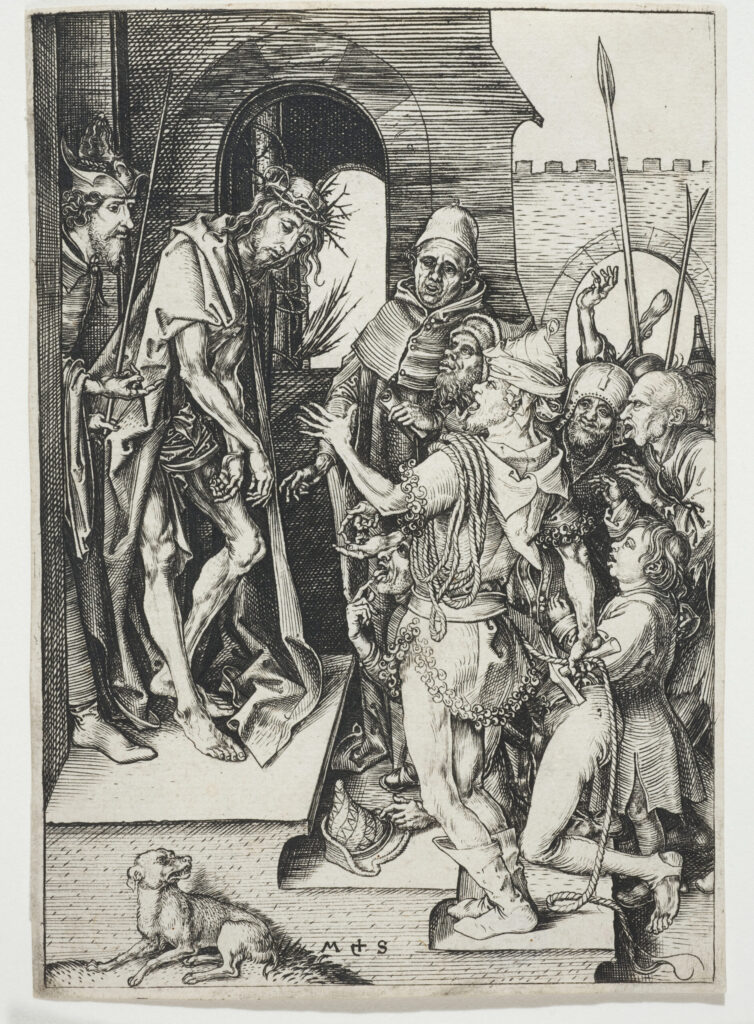
Friedrich Nietzsche’s work “Ecce Homo” represents a unique form of autobiography that goes far beyond conventional biographical conventions. It is a mirror of his personal truth, deeply rooted in a self-confident self-transcendence and a radical critique of morality. The book is not only a retrospective of his life, but also a fascinating web of pride, ironic distance, and future prophecy, revealing the essence of a genius in an aesthetic of self-stylization. While many readers are drawn to the provocative way Nietzsche presents himself and his philosophy, there is also criticism of the subjective perspective and what is occasionally perceived as a clumsy translation. Yet it is precisely this mixture of self-portrayal and philosophical radicalism that makes “Ecce Homo” a fascinating document that continues to challenge us today to rethink our own self-understanding and our cultural values.
The Philosophical Self-Overcoming in “Ecce Homo”: A Lifelong Struggle
At the heart of “Ecce Homo” is the idea of self-overcoming, which Nietzsche perceives as a permanent task. Unlike conventional autobiographies, in which life is often narrated linearly, Nietzsche presents his life as a series of intense moments in which he radically transformed himself. The text reveals less an objective chronicle than a philosophical self-narrative in which his own development takes center stage. Nietzsche achieves self-overcoming as a continuous confrontation with his own weaknesses, mistakes, and societal expectations.
For example, Nietzsche describes his intellectual path as a process of turning away from traditional moral concepts, which he marks with his “Critique of Morals.” In doing so, he uses a stubborn attitude to challenge the conformity and zeitgeist of his era. Life thus becomes a stage for a struggle on which the philosopher presents himself as a tireless fighter who is never satisfied with the status quo. This motif can be understood as a therapeutic one – “Ecce Homo” functions as a document of self-healing and self-empowerment that reveals Nietzsche’s inner transformations.
Nietzsche’s self-description as a “genius” and his pride in his own uniqueness support this radical outlook on life. He describes himself not merely as a victim of circumstances, but as the active creator of his own biography. For him, genius reveals itself not only in philosophical radicalism, but also in the aesthetic design of his lifestyle and thought. Through this combination, “Ecce Homo” becomes more than a mere autobiography—it becomes a manifesto of a self-determined life, providing inspiration for modern self-concepts.
It is this combination of deep personal truth and conscious staging that makes “Ecce Homo” a work that still offers us an unusually intensive glimpse into the process of self-realization. At a time when the search for authentic identities is gaining increasing importance in digital and societal change, Nietzsche’s concept of self-overcoming appears as a powerful stimulus for reflection.
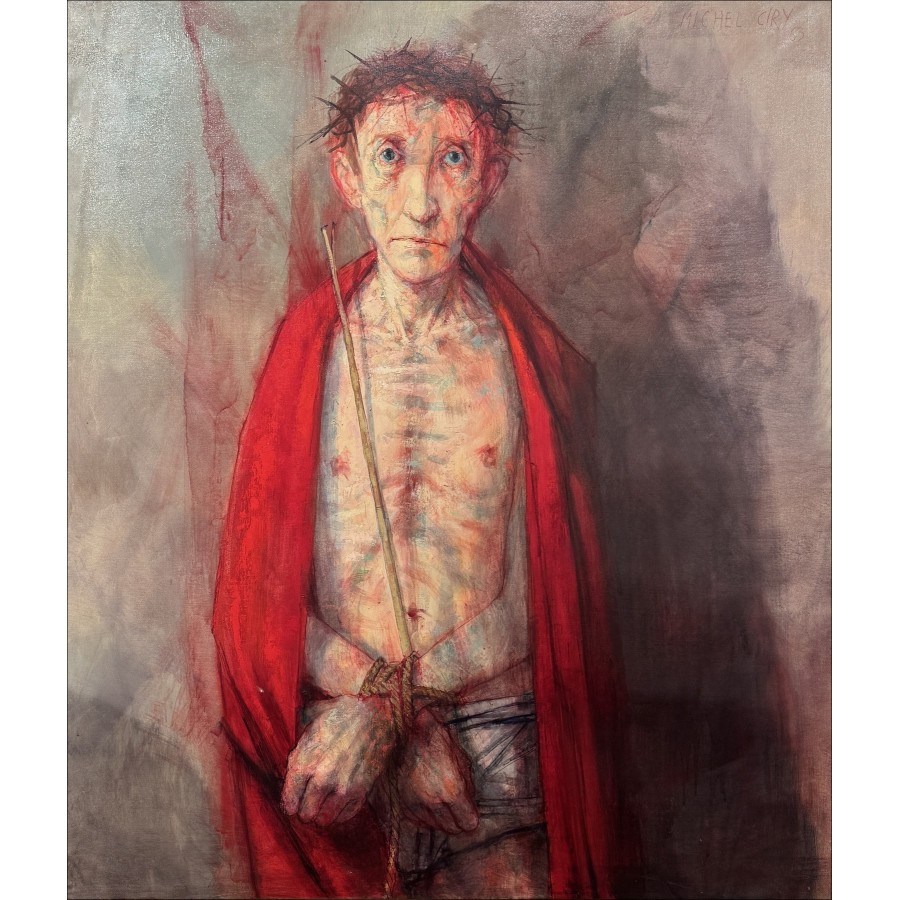
Pride and Ironic Distance: Nietzsche’s Ambivalence in Self-Presentation
Another central aspect of “Ecce Homo” is Nietzsche’s paradoxical approach to pride and ironic distance. The work is characterized by a provocative, at times challenging tone, combining pride in his own work with a deliberately employed irony. This tension makes the philosopher’s self-presentation extremely complex and multifaceted.
Pride is evident in Nietzsche’s lofty and sometimes almost arrogant assertions, with which he presents himself as a unique genius. He not only demands respect but declares himself the standard of philosophical greatness. Thus, he sees his “transvaluation of values” as a historic act that will fundamentally change the course of culture. This self-confidence takes on almost prophetic traits when Nietzsche presents himself as the pioneer of a new philosophy that challenges and transforms modern man.
At the same time, “Ecce Homo” encounters an ironic distance towards this pride. Nietzsche consciously plays with his role as a genius artist, occasionally associating himself with the “Antichrist” to provoke traditional values and irritate his audience. This irony serves not only as a stylistic refinement, but also as a defense mechanism to conceal the vulnerability behind his boastful self-presentation. This is exemplified in his sharp attacks on figures like Richard Wagner or institutionalized belief systems, which he comments on with a mixture of mockery and seriousness.
This paradoxical attitude—pride paired with ironic distance—makes the work both ambivalent and exciting. It challenges the reader to constantly navigate between admiration and skepticism and invites them to question the boundaries between philosophical radicalism and literary self-expression. Numerous contemporary interpretations thrive on this complexity, continually rediscovering Nietzsche’s autobiography and thus keeping its cultural content alive.
Future Prophecy and Radical Critique: Nietzsche’s Vision of a New Morality
“Ecce Homo” is not only a retrospective, but also a prophetic work in which Nietzsche outlines his vision for the future of culture and philosophy. His future prophecy is closely linked to a critique of existing moral values, which he describes as decadent and hostile to life. In doing so, he emphasizes the need for a re-evaluation of all values that will produce a new type of human being.
The metaphorical figure of the superman, already introduced in earlier works, is anchored in an autobiographical context in “Ecce Homo.” Nietzsche describes himself as a harbinger of this new type of human being, whose self-determination and creative stubbornness form the basis for an expanded art of living. His work is thus simultaneously understood as a prophetic testimony calling for a radical departure from traditional ways of thinking and living.
This prophecy of the future is accompanied by a sharp critique of Christianity, nationalism, and “modern man,” all of which symbolize the stunted level of humanity. Nietzsche sees old morality as a shackle that restricts the spirit and prevents life in all its fullness. This critique manifests his philosophical radicalism, which aims not only at theoretical arguments but also at the existential dimension.
The prophetic power of “Ecce Homo” is also evident in the fact that Nietzsche’s ideas are regaining significance in many areas today, in 2025. Questions of individuality, ethical reorientation, and cultural self-determination are currently at the top of the social agenda. Nietzsche functions as a provocative thinker whose provocative visions serve both as a challenge and inspiration.
Aesthetics of Genius and Self-Stylization: The Art of Self-Portrayal in Nietzsche’s Work
A characteristic feature of “Ecce Homo” is the conscious and artful staging of the author as a genius. Nietzsche breaks with traditional notions of modesty and restrained self-description and uses the medium of autobiography to aesthetically shape his own world of life and thought. In doing so, philosophy becomes a creative act, comparable to the creation of a work of art.
The aesthetics of genius are evident in the use of rhetorical devices, a vibrant language, and a strong use of symbolism. Nietzsche stylizes himself as a dramatic figure operating in a conflict between genius and outsider status—a reflection of the Romantic tradition of genius, but also a precursor to modern self-dramatization. The book is a monumental work of self-stylization, with both literary and philosophical implications.
This artificial self-fashioning not only serves vanity, but also fulfills an important social function: Nietzsche challenges the reader to reflect on the boundaries of truth, identity, and authenticity. The boundaries between biographical fact, subjective interpretation, and literary fiction are fluid, which distinguishes “Ecce Homo” as a philosophical autobiography.
This genius aesthetic can be seen exemplified in Nietzsche’s portrayal of his illness and fate. Instead of presenting them as a sign of weakness, he transforms them into an element of his unique aura. The book thus becomes a synthesis of personal truth and aesthetic design, making the work a timeless classic.
Reception History and Current Significance of “Ecce Homo”
Since its posthumous publication in 1908, “Ecce Homo” has experienced a varied reception history, ranging from admiration to skepticism. Many readers are fascinated by the profound insights into Nietzsche’s thought and his uncompromising honesty. New translations, such as those by Duncan Large, are valued for their clarity and freshness, which is why the work is also widely used in academic contexts and in teaching.
On the other hand, some reviewers criticize the subjective nature of the autobiography and the arrogance expressed in Nietzsche’s words. Some readers may find it disappointing that “Ecce Homo” does not offer a conventional, straightforward biography, but rather a philosophical reflection with a promotional tone. These differences highlight the ambivalent nature of the work, which can be understood neither entirely as a biographical document nor as a conventional philosophical treatise.
Despite these controversies, “Ecce Homo” is receiving renewed attention, especially today. Especially in a world searching for new paths for individuality, identity, and self-determined living, Nietzsche’s work offers valuable inspiration. It challenges us to critically examine our own beliefs while simultaneously finding the courage to shape our own lives in a self-determined way—a timeless message that seems more relevant than ever in 2025.
At the same time, its reception also encourages a nuanced reading that understands Nietzsche’s philosophical radicalism, his prophecy of the future, and his ironic distance as integral components of his self-portrayal. Thus, “Ecce Homo” remains an exceptional source for understanding the intertwining of life, art, and philosophy.