Friedrich Nietzsche’s work “The Birth of Tragedy from the Spirit of Music” is a profound attempt to re-understand the essence of Greek tragedy. At its core, Nietzsche focuses on the union of two opposing principles: the Apollonian, which represents measure, order, and clarity, and the Dionysian, which embodies ecstasy, intoxication, and chaos. According to Nietzsche, this fusion forms the basis for the powerful and moving impact of ancient tragedy. Recognizing this unity not only offers insight into the ancient art form itself but also sheds light on the challenges and possibilities of modern art and culture in the year 2025.
The Essence of the Apollonian and Dionysian in Ancient Tragedy
Nietzsche describes the Apollonian as the expression of order, moderation, and individual form. It symbolizes the art of sculpture, architecture, and rational clarity, as it is particularly evident in ancient poetry and writing. Apollo, the god of light and reason, represents this harmonious, measured design that gives people a clear perspective on the world.
In contrast, the Dionysian embodies the chaotic, the unconscious, and the ecstatic experience. Dionysus, as the god of wine and intoxication, represents the dissolution of individual boundaries and the merging with primal life—a passionate, wild force that transcends the merely rational. Music, dance, and orgiastic rituals are expressions of this Dionysian experience, which can lead people into deep ecstasy and communion.
In ancient tragedy, this dichotomy manifests itself in the exciting balance of elements. The plot, language, and form of the drama—the Apollonian—are permeated by clear structures, while at the same time the song, dance, and musical passages—the Dionysian—evoke a frenzy and collective ecstasy. This dialectical connection enables an experience in which human passions and universal order are simultaneously tangible.
A practical example from Sophocles’ tragedy, such as “Antigone,” clearly demonstrates this contrast: The dialogues are strictly ordered, the characters act according to clearly defined moral standards (Apollonian), while at the same time the emotional intensity and musical moments immerse the audience in an ecstatic mood (Dionysian). Thus, tragedy is more than just a narrative form—it becomes the stage for the existential experience of the union of these opposing forces.
This dichotomy of the Apollonian and the Dionysian remains relevant for understanding modern culture and art. The search for an appropriate balance between order and intoxication, between control and passion, remains a central challenge for artists and audiences in 2025, especially in times of increasing technological penetration and emotional fragmentation.
The pivotal role of union in Nietzsche’s theory of tragedy
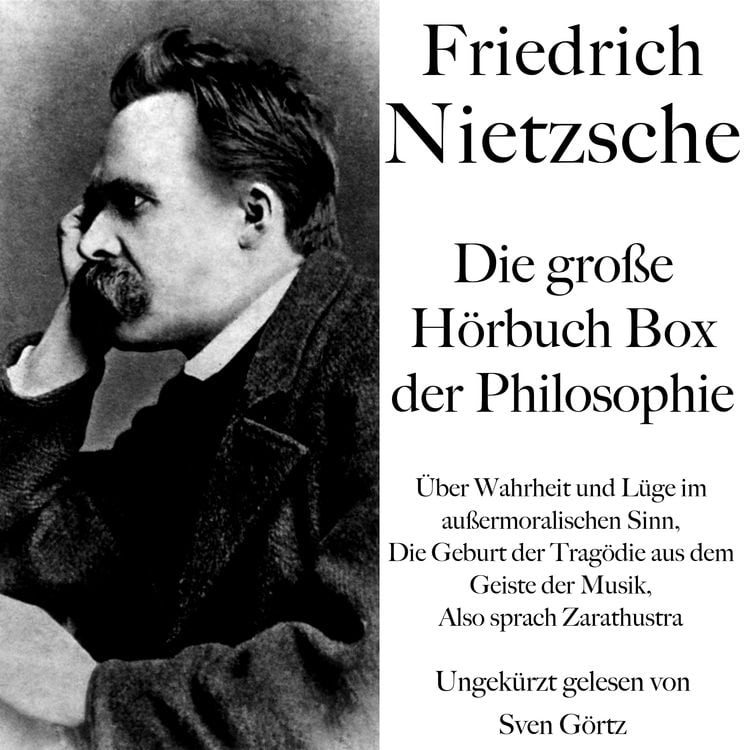
In “The Birth of Tragedy,” Nietzsche argues radically against the isolated understanding of art as a purely rational or purely emotional phenomenon. He emphasizes that tragedy derives its transformative power precisely from treating the Apollonian and the Dionysian not as opposites, but as an inseparable unity that mutually condition and complement each other.
This productive “union” allows tragedy to touch both the surface of consciousness and the deep layers of the unconscious. Through the Apollonian form, the chaos of Dionysian ecstasy is encompassed and made tangible. Thus, a work of art emerges that leads people to both rational insight and emotional experience.
Nietzsche sees tragedy as an art form that reflects human life in all its contradictions—a life characterized simultaneously by order and chaos, happiness and suffering, beauty and ugliness. It is precisely because of this confluence of contradictory elements that tragedy engenders a profound sense of catharsis and existential truth.
A practical example from the genesis of tragedy illustrates the function of this unity: The chorus, which frequently sings and dances, represents the Dionysian, while the dialogues between individual characters reflect Apollonian control and measure. This interplay allows the audience to engage emotionally and intellectually in equal measure, something often lost in modern forms of theater.
The importance of this union can also be observed in 2025 in contemporary art projects that attempt to overcome boundaries between rationally designed media and emotionally stirring performances. Music festivals, innovative theater productions, and immersive media productions allow the exhilaration of the Dionysian to be combined with the structure and measure of the Apollonian—in the spirit of Nietzsche.
The Decline of Ancient Tragedy and the Role of Socratic Rationalism
For Nietzsche, not only the emergence but also the decline of Greek tragedy is connected to the connection or separation of the Apollonian and Dionysian elements. He attributes this decline primarily to the dominance of Socratic thought, which placed rationalism and reason above all else and thus displaced the Dionysian element.
The great change in Greek culture was the turn to reason as the central standard for truth and the shaping of life. While the preceding period still celebrated the ecstatic experiences of Dionysus, Socrates ushered in an era of moderation and critical-rational reflection. For Nietzsche, this shift rendered tragedy sterile, for without the element of intoxication and chaos, art could no longer portray the full depth of life.
Euripides is criticized as an exemplary playwright who introduced the Socratic influence into tragedy. Through his complex moral dialogues and rational argumentation, Euripides increasingly dissolved the originally Dionysian element of tragedy, transforming it into a morally instructive form of representation.
This development is reflected in modern culture, which is characterized by science, technology, and rationalism: a shift that Nietzsche sees as a loss of life-affirming ecstasy. Paradoxically, the culture of 2025 presents similar challenges to those of antiquity, as technological progress is often accompanied by emotional impoverishment, making access to the Dionysian more difficult.
Nietzsche therefore warns against an overemphasis on moderation and pure reason at the expense of passion, intoxication, and deeper artistic experience. He sees the path to a renewal of culture in restoring the lost unity of the Apollonian and the Dionysian. This perspective also resonates strongly in today’s cultural debate.
Nietzsche’s Vision of a New Tragedy for the Present
In light of the crisis of modern culture, Nietzsche advocates a return to Dionysian power as the source of true art and life-affirming existence. For him, the rebirth of tragedy is not only an aesthetic but also an existential imperative.
Nietzsche particularly emphasizes the music of Richard Wagner, which, in his view, makes the fusion of Apollonian moderation and Dionysian intoxication anew tangible. Wagner’s operas are full of enthusiasm and mystical ecstasy, yet simultaneously possess a strict form and artistic clarity. They offer audiences access to a profound emotional and spiritual experience, which Nietzsche considered ideal in ancient tragedy.
In 2025, artists, musicians, and philosophers alike face the challenge of reestablishing this powerful connection in art. Developments in digital arts, interactive theater forms, and immersive experiences demonstrate attempts to reconnect Dionysian ecstasy and Apollonian proportion.
However, the effort to achieve this unity also faces social barriers: The fast-paced, technology-driven world often demands practicality and controllability, while the Dionysian is difficult to fit into such frameworks. Nevertheless, modern festivals, avant-garde performances, and experimental music projects offer a living testament to Nietzsche’s idea that only through the union of order and ecstasy does art attain its most vital form.
This perspective is a call not to surrender human experience exclusively to the rational, but to create space for intoxication, emotion, and the primal in order to sustainably revitalize culture and identity.
The continued relevance of Nietzsche’s concept in today’s art and culture world
Nietzsche’s concept of the fruitful union of the Apollonian and the Dionysian has not only had a lasting impact on philosophy but has also had a profound influence on art, literature, and theater to this day. In 2025, this dichotomy is palpable in various cultural practices, such as festival programs, impact analyses of new media, and interdisciplinary art projects.
Artists consciously exploit the tension between measure and intoxication, structure and emotionality, to make their works both rationally accessible and intensely tangible. In digital art, orchestrated visual worlds and algorithmically controlled compositions merge with spontaneous, unpredictable audience interactions—a modern reflection of the Apollonian-Dionysian tension.
Furthermore, the theme of unification is gaining attention in cultural education, serving as a model for a balanced self-understanding and a holistic artistic experience. Schools, universities, and cultural institutions are drawing on Nietzsche’s idea to promote new forms of aesthetic communication that equally appeal to the intellect and emotion.
The discussion of moderation and the balancing act between control and intoxication is also evident in popular culture, for example, in the staging of music festivals, where organizational precision and ecstatic experiences collide. This model promotes a culture of conscious experience that addresses the human psyche holistically.
Nietzsche’s critique of pure rationalism thus remains urgent and relevant. The search for a new “birth of tragedy” is still necessary in the 21st century to counteract the increasing isolation and alienation caused by technology and rationality. His vision reveals ways in which art and culture can remain vital and meaningful by revitalizing the ancient principles of Apollo and Dionysus.