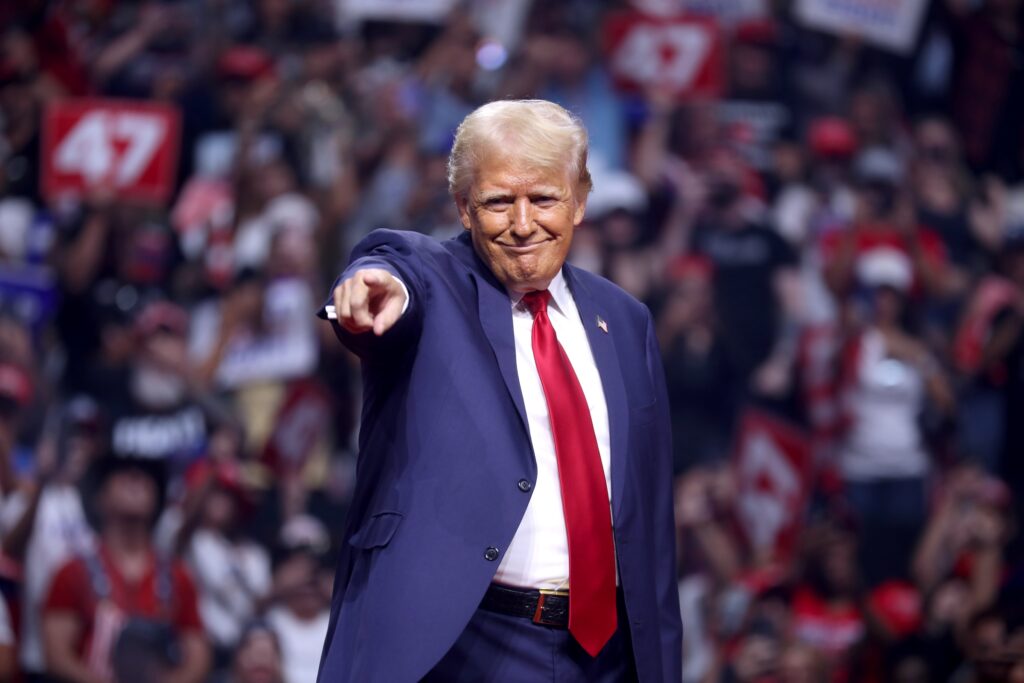
The recent US military actions under Donald Trump’s leadership off the coast of Venezuela have raised international concern and triggered increased calls for restraint from the United Nations (UN). Amid a heightened global geopolitical climate characterized by trade conflicts, security concerns, and diplomatic tensions, we examine the situation from various perspectives. Particularly in light of US foreign policy and growing international reactions, Washington’s actions are the focus of a broad media and political debate.
US Military Actions Off Venezuela: International Criticism and UN Call for De-escalation
For several weeks, US forces have been conducting attacks on boats suspected of carrying drugs off the Venezuelan coast, citing the desire to halt the flow of drugs to the United States. According to reports from Washington, over 20 people have been killed. However, the US government has not yet clearly explained the exact legal basis for these operations, leading to criticism from both the government and civil society.
The United Nations is therefore calling for restraint and constructive dialogue. Miroslav Jenča, the UN Assistant Secretary-General for Europe, Central Asia and the Americas, emphasized the importance of peaceful solutions and the need to avoid further escalation in a Security Council meeting. Meanwhile, the US delegation defended the approach and announced that it would take further military action if necessary.
International political reactions and media coverage
The media such as Tagesschau, Der Spiegel and Frankfurter Allgemeine Zeitung report extensively on the tensions. The lack of transparency in the US approach is viewed particularly critically, which is interpreted in the German press as a potential trigger for regional destabilization. There is also growing concern that the military operations could further strain the already fragile relations in Latin America.
The Süddeutsche Zeitung points to the connections between the military activities and the domestic political challenges of Trump’s administration, while Die Welt and Zeit Online analyze the strategic dimension of the actions. Deutsche Welle and ZDF emphasize the need for multilateral conflict resolution and dialogue offers in order to achieve a lasting solution.
Trade conflicts and security issues in a global context
Parallel to the military tensions off Venezuela, the trade war between the USA and China is heating up. New port fees and import duties are spreading to shipping, which is having a significant impact on the global movement of goods. The US has announced tariffs of up to 100 percent on Chinese goods, while China has taken countermeasures. Experts warn of a far-reaching disruption of global logistics and supply chains, for example in Spiegel and at the taz.
| Affected ship types | Percentage of global fleet |
|---|---|
| Oil tanker | 13% |
| Container ships | 11% |
The International Maritime Organization (IMO) is planning measures to reduce greenhouse gas emissions, but the USA rejects these proposals and threatens sanctions against states that implement them in the shipping sector. The US secretaries of state and energy expressed their opposition in order to prevent cost increases for US companies and consumers.
These dynamics demonstrate how US policy in 2025 will continue to operate at the intersection of national security, economic policy, and environmental policy, as comprehensively analyzed in reports by Deutsche Welle, ZDF, and ARD.
Regional Peace Initiatives: Trump’s Mediation at the ASEAN Summit
At the same time, the Trump administration is diplomatically engaged in Southeast Asia. Trump is expected to participate in the peace agreement between Thailand and Cambodia during the ASEAN Summit in Malaysia. The conflict led to hundreds of thousands of displaced people and dozens of deaths a few months ago. This engagement illustrates an ambivalent foreign policy image of the US under Trump – militarily confrontational in Latin America, but mediating in other regions.
Further background and evaluations of the global situation with assessments of Trump’s policies are provided by articles such as Global Developments: Trump’s Policies Diminish the US and Affect the Economy and Ukraine Live Ticker: Trump Announces Preparations for Phase 2 of Sanctions Against Russia. Domestic political challenges: shutdown, health status, and societal pressure
The domestic political climate in the US continues to be shaped by the budget deadlock (“shutdown”) that has been ongoing for days, which has led to significant layoffs in federal agencies. The FAA is struggling with staffing shortages, resulting in flight delays and cancellations. The president ordered budget reallocations to pay troops, but tensions between Republican and Democratic legislative factions remain.
Affected agencies
| Number of layoffs | Department of the Treasury |
|---|---|
| 1200+ | Department of Health and Human Services |
| 900+ | Department of Education |
| 800+ | The health of former President Joe Biden is also being discussed, while President Trump is officially classified as “healthy and fit” – a rating that fuels political debates. At the same time, media outlets such as the Süddeutsche Zeitung, ZDF, and ARD are reporting on social tensions, for example, the case of Antifa expert Mark Bray, who left the US due to death threats. |
Further analyses of the political and social situation can be found under
Ukraine Summit in Paris: Trump’s Restraint and the European Challenges and Trump Calls on Israel to Show Prudence in Dealing with Qatar .Source: