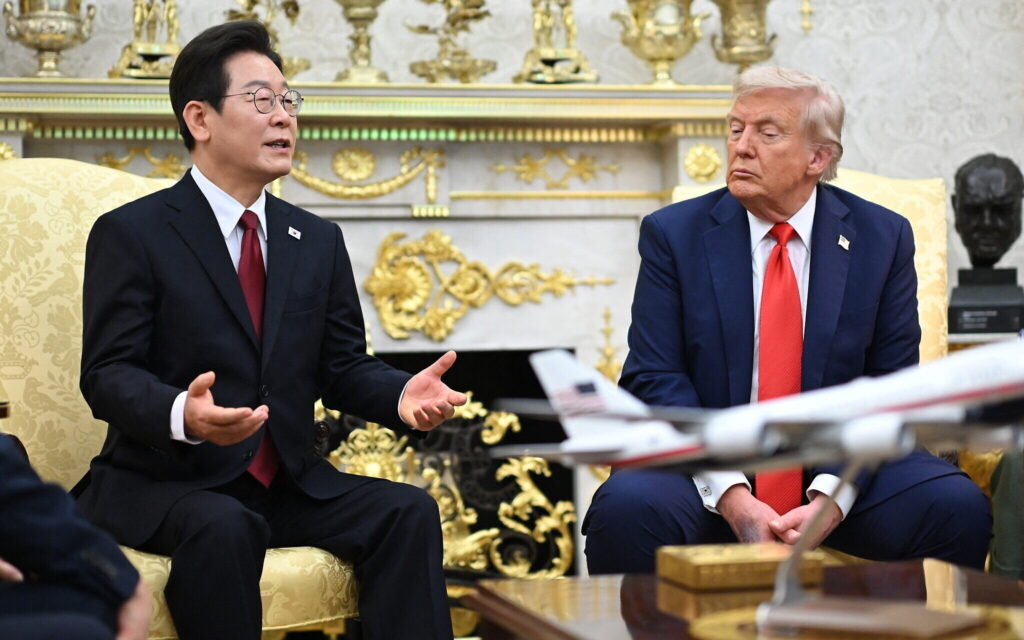
Donald Trump’s proposal to end the Middle East conflict in the Gaza Strip is viewed by many as a pragmatic form of realpolitik. His foreign policy is guided by the principles once defined by Henry Kissinger as the cornerstones of successful power politics. It focuses on a sober assessment of power relations and seeks solutions that appear feasible despite complicated political realities. When considering Trump’s approach to diplomacy, clear parallels to Kissinger’s pragmatism can be seen.
Realpolitik Strategies in Trump’s Gaza Plan and Their Background
Donald Trump presented a multi-stage peace plan for Gaza that not only calls for a ceasefire, but also includes the release of hostages and comprehensive international support. His strategy aims to loosen the deadlock between Israel and Hamas by focusing on pragmatic compromises rather than overcoming ideological differences. This approach was presented on the sidelines of a peace summit in Sharm el-Sheikh and met with mixed reactions worldwide.
Diplomacy and Power Politics: Balancing Conflict and Compromise
Trump’s plan contains 20 points that encompass both concrete security guarantees for Israel and steps to improve living conditions in the Gaza Strip. He acknowledges the realities on the ground, creating a basis for pragmatic negotiations. The integration of international actors is intended to facilitate implementation and share responsibility. Nevertheless, key questions remain unanswered, particularly the role of Hamas and the conditions for a sustainable peace order.
| Aspect | Trump’s Approach | Criteria of Realpolitik (Kissinger) |
|---|---|---|
| Pragmatic Implementation | Focus on Feasible Interim Results | Negotiating Despite Ideological Differences |
| Security Guarantees | Protecting Israel as a Priority | Balancing Power to Avoid Conflict |
| International Involvement | Multilateral Support | Strengthening Alliances and Influence |
Impact on US Policy and the Middle East Conflict in 2025
The implementation of Trump’s Gaza plan presents challenges for US policy in 2025, as regional actors have differing expectations. While Washington’s foreign policy benefits from intensive involvement, the complexity of the Middle East conflict requires flexible adaptation of strategies. Trump’s realpolitik-oriented approach impacts the international dialogue by focusing on controlled, sustainable negotiation steps rather than ideological rigor.
Conflict Resolution Through Pragmatism – Opportunities and Limitations
The negotiations are aiming for an interim solution that alleviates pressure from both sides but does not guarantee final peace. The pragmatism in Trump’s foreign policy reflects the influence of Henry Kissinger, whose concepts of realistic power politics have shaped diplomacy for decades. While the focus on manageable steps opens up a new perspective, success depends largely on the willingness of the conflicting parties.
Trump’s Peace Initiative in the Context of International Power Politics
This approach relies on a sober view of the current balance of power and avoids excessive utopian expectations. In the world of diplomacy between Israel, Hamas, and other Arab states, Trump’s pragmatic approach is viewed as a responsible attempt aimed at achieving concrete results despite all differences. This approach supports the idea that diplomacy is equally driven by power politics and pragmatism.
| International Actors | Role in the Peace Process | Influence on Trump’s Plan |
|---|---|---|
| Israel | Agreement, but with reservations | Security is paramount |
| Hamas | Ambiguous stance, willingness to engage in dialogue | Origin of the conflict remains to be clarified |
| Egypt | Mediating role in the summit | Facilitating diplomatic exchange |
| USA | Initiator and supporter | Directs realpolitik-oriented diplomacy |
Source: www.spiegel.de