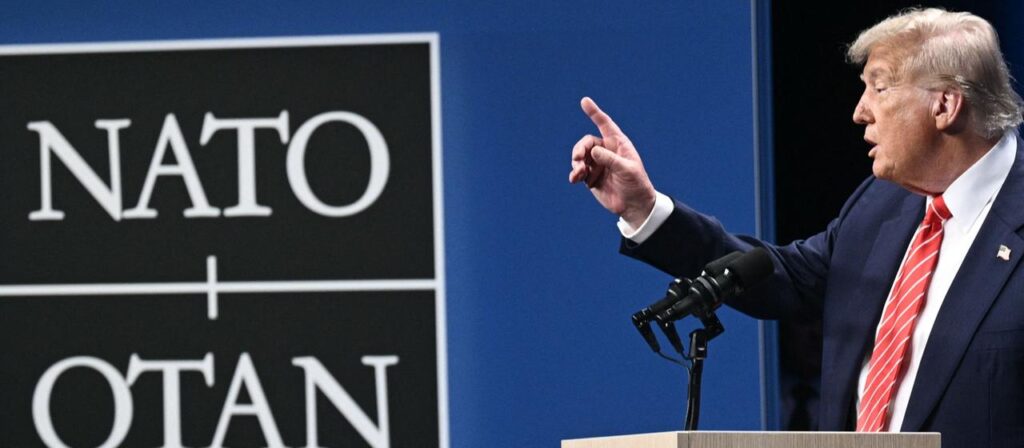
On July 12, 2018, NATO faced one of its greatest challenges in decades. During an emergency meeting in Brussels, US President Donald Trump threatened to withdraw from the transatlantic security alliance if European members did not quickly increase their military spending to the 2 percent target. In his recent memoirs, Jens Stoltenberg, then NATO Secretary General, provides a detailed insight into the tensions and negotiations that shaped this crisis of confidence and laid the foundation for today’s increase in defense spending to 3.5 percent and beyond.
NATO Crisis 2018: Stoltenberg’s Report on Trump’s Ultimatum and the Consequences
The US President issued a clear ultimatum: NATO members must significantly increase their defense spending either immediately or by January 1. Otherwise, the US would “do its own thing.” A tense atmosphere prevailed during the summit, particularly due to Trump’s continued criticism of Germany’s military spending and its dependence on Russia through Nord Stream 2.
Stoltenberg described the dramatic moments when Trump nearly walked out of the summit, which could have spelled the historic end of the alliance. However, the intervention of Chancellor Angela Merkel and other European leaders persuaded the president to stay, ensuring NATO’s continued existence.
Angela Merkel’s Role in Stabilizing NATO Relations
Merkel’s skillful intervention at the meeting helped to ease tensions, even as she pointed out that the decision on defense spending rested with the Bundestag. Her argument that Germany was already NATO’s second-largest troop contributor and had fulfilled its obligation to provide assistance despite limited financial contributions resonated with other European leaders, such as Emmanuel Macron.
Trump’s calls to increase military spending to four percent of economic output, however, were met with skepticism. The discussions highlighted the underlying crisis of confidence between the US and Europe regarding burden-sharing within the alliance.
Long-term impact: From the crisis of confidence to new military spending targets
The events of 2018 led to significant decisions in the following years. The originally agreed two percent target was raised to a 3.5 percent increase in hard military spending, plus a further 1.5 percent for related areas such as cyber defense and infrastructure. Russian aggression against Ukraine since 2022 has further increased awareness of Europe’s military weaknesses.
Germany sent a clear signal in 2021 with a special fund of €100 billion to strengthen the Bundeswehr. NATO countries then increased their defense spending almost unanimously, prompted by rising security concerns in Europe and the transatlantic world.
Crisis of Confidence as a Driver for Far-Reaching Reforms
Stoltenberg’s memoirs show how Trump described the US as indispensable, but formerly NATO as “obsolete.” Despite harsh words, the alliance ultimately evolved under the pressure exerted by the president. The need for a healthy balance in transatlantic relations was increasingly recognized.
In June 2025, under the leadership of Stoltenberg’s successor, Mark Rutte, NATO renewed its commitments to respond adequately to evolving global threats. Rutte had already assumed a mediating role at the 2018 summit and played a key role in defusing Trump’s conflictual position.
| Year | Military Spending as % of GDP (Europe) | US Ranking in Defense Spending | Special Events |
|---|---|---|---|
| 2018 | 1.2% | 1 | Trump Threatens to Leave NATO |
| 2021 | 2.0% (Germany with the Help of Special Fund) | 1 | Launch of the Special Fund for the Bundeswehr |
| 2025 | 3.5% (Target) | 1 | Not just 2%, but 5% of total spending approved |
Despite the tensions, the US commitment remains key to European security policy. Learn more about the political dynamics here.
Economic and security policy dimensions of the transatlantic defense partnership
The debates surrounding military spending reflect the deeper questions about burden sharing within the transatlantic relationship. The US insists that partner states contribute their fair share so as not to jeopardize the stability of the security alliance. Europe responded by gradually increasing its defense spending and investing in areas such as cyber defense, which are becoming increasingly important in a modern security architecture.
This financial response is closely linked to strategic challenges such as Russian influence and the debate over Nord Stream 2.NATO is not just a military alliance, but a key factor in political stability and security in Europe and North America.
| Dimension | Relevance for NATO 2025 | Example |
|---|---|---|
| Military Spending | Increasing Funding for Conventional Armed Forces and Cyber Defense | EU Special Fund for the Bundeswehr |
| Political Stability | Essential for Trust Between Member States | Cohesion Despite Trump’s Threats |
| Security Cooperation | Expansion of Joint Defense Projects | Cooperation on Cyber Defense and Infrastructure |
Close coordination between the US and Europe remains crucial. Background information on the US political leadership can be found here.
Source: www.faz.net