Tesla is giving the 2025 Model 3 series a surprising update that will delight many fans of the electric car world. After facing heavy criticism two years ago for removing two essential functions, the company is now relenting and bringing these features back into the standard repertoire. The focus is on the return of the classic turn signal stalk and the reintroduction of a key front camera, which will provide greater safety and convenience. While Tesla continues to face market challenges and competition from manufacturers such as BMW, Mercedes-Benz, and Porsche, this step demonstrates its willingness to consider customer preferences and redefine driving comfort. The history of the Model 3 models is closely intertwined with technological innovations as well as the influence of suppliers and industry giants such as Siemens, Bosch, and Daimler, whose development trends continuously influence the automotive industry.
The Return of the Turn Signal Stalk – A Long Overdue Decision
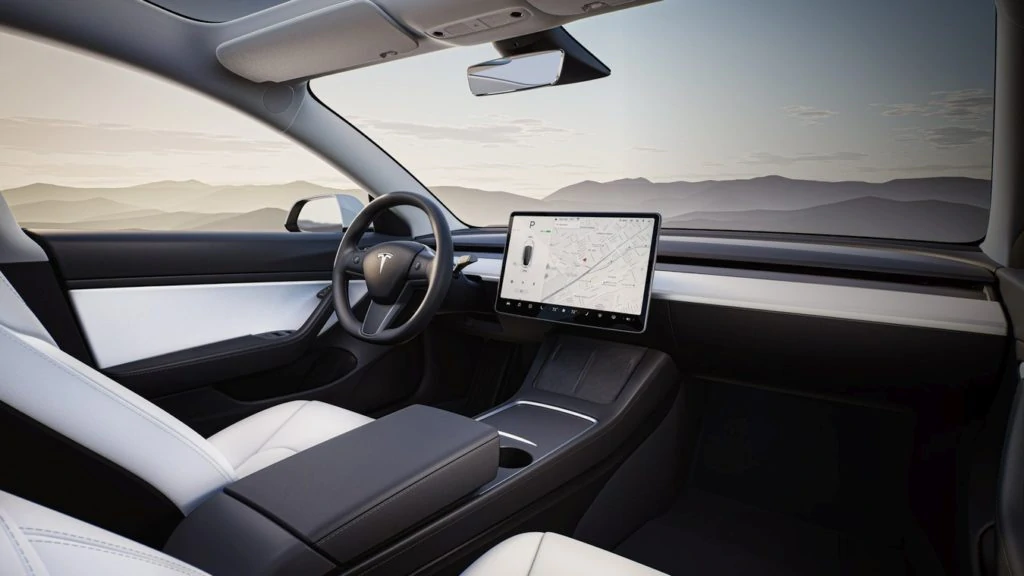
Since the fundamental redesign of the Tesla Model 3 in 2023, drivers have experienced a dramatic change: The familiar turn signal stalk on the steering column has been removed and replaced with capacitive buttons on the steering wheel. Although Tesla is known for technological innovation, this change met with widespread criticism from users. Many drivers missed the physical feedback and intuitive operation of the classic stalk, especially in everyday driving situations in city traffic and on the highway. Fortunately, Tesla has now recognized that drivers are reluctant to easily exchange traditional controls for innovative systems if they compromise ease of use.
The return of the turn signal stalk will initially take place in China, where all newly ordered Model 3s will be delivered with the classic stalk control. Owners of the current generation have the option of purchasing a corresponding retrofit kit for around 300 euros. This development is also related to the strict requirements of EuroNCAP, which is increasingly critical of button controls without haptic feedback. A lower safety score can have far-reaching consequences for registrations and sales figures in Europe. Rival manufacturers such as Audi and Volkswagen, however, continue to rely on tried-and-tested physical controls, demonstrating that innovation doesn’t always have to come at the expense of practicality.
The feedback from many drivers, for whom the turn signal stalk is a given, illustrates how important even seemingly small details are for the user experience. For example, a driver from Munich reported that after switching to the Model 3 with touch buttons, he accidentally activated or failed to activate the turn signal several times, which led to risky situations in dense city traffic. This example underscores the strong emotional and practical connection to traditional vehicle controls. Manufacturers like Opel and MAN also often consider the user experience in such design decisions to increase acceptance of their vehicles.
The front camera as the key to improved driver assistance and safety
In addition to the turn signal lever, Tesla is bringing back a front camera in the redesigned Model 3 version, which was briefly shown at the launch of the new version but then disappeared again. This camera is integrated into the front bumper and offers decisive advantages in active driver assistance, as well as parking and navigating in tight situations. Operational recordings and internal documents indicate that this camera will be installed in all models as early as the fourth quarter of 2025.
The front camera primarily improves the view of obstacles directly in front of the vehicle, which is useful in numerous driving situations. While some competing models from Mercedes-Benz and Porsche also rely on comprehensive camera systems, Tesla is specifically focusing on a robust camera architecture that integrates seamlessly with the Tesla Vision System. This allows the software to process environmental data more precisely and improve the functions of the Autopilot and Full Self-Driving systems. Developments by Bosch and Siemens, which have been contributing to increased road safety for years with innovative sensor solutions, are particularly noteworthy in this regard.
Elon Musk’s decision to forego LiDAR sensors, unlike other manufacturers, demonstrates a clear technological positioning: Tesla believes in the power of a combination of cameras and AI-based image processing. The potential to increase driving comfort through precise environmental perception is enormous, especially in urban areas with high traffic volumes and complex traffic situations. A driver from Berlin reported how using the front camera made maneuvering in tight parking spaces significantly easier—a simple yet effective convenience improvement.
Other manufacturers such as Daimler and Volkswagen are also currently developing their own systems with improved camera performance. However, Tesla is already achieving particularly high levels of efficiency and safety through the combination of hardware and software. The focus on front cameras demonstrates that technological evolution doesn’t always mean abandoning tried-and-tested features, but rather a clever interplay of the old and the new is possible.
The impact of the new battery generation on range and sustainability
With the introduction of the revised Model 3 and Model Y series, a new generation of batteries with larger capacities is also coming to market. This not only enables an extended range but also improves the sustainability and efficiency of the vehicles. While BMW, Audi, and Porsche are already intensively researching their own battery innovations, Tesla continues to focus on achieving top values in range and charging speed through the combination of battery design, electronic control, and thermal management.
The new batteries are a further step towards increasing the competitiveness of the Model 3 series, especially in light of rapidly increasing competition from the technological and economic environment. Collaboration with suppliers such as Bosch and Siemens, who supply manufacturers with state-of-the-art electronic components, plays a significant role here. It can be assumed that the new battery will meet drivers’ needs for a range suitable for everyday use, allowing even longer journeys without the hassle of stopping.
It’s also interesting to note that new software updates are planned in parallel to optimize battery use. Such advances are linked to the broader trend toward sustainable mobility, in which companies like Volkswagen and Daimler are also investing. The expansion of charging infrastructure and intelligent energy management systems will have an increasingly greater impact on how comfortable and environmentally friendly electric cars like the Model 3 can be used in the future.
Overall, it’s clear that Tesla isn’t just responding to direct competition with the new batteries, but is also meeting the high demands of environmental awareness and technological innovation. Combined with the return of features like the turn signal stalk and the front camera, this innovation elevates the driving experience to a new level.
How Tesla Responds to Customer Feedback and Market Demands
The history of the Model 3 impressively demonstrates the importance of taking customer requests seriously and responding flexibly to criticism. The removal of the classic turn signal stalk was perceived by many drivers as a step in the wrong direction and led to public outrage. Tesla has acknowledged this surprise and decided to reinstate this feature. This approach underscores the dynamic changes the automotive industry is undergoing in the age of digitalization.
Unlike traditional automakers like Mercedes-Benz or Opel, which often maintain long product cycles and conservative designs, Tesla is able to respond more quickly to technical challenges and customer requests. The combination of innovative software development and the use of state-of-the-art hardware components makes this transformation possible. The company has also recognized that a simple and intuitive user experience is just as crucial for electric vehicles as range or design.
Furthermore, Tesla’s handling of the return of the front camera demonstrates that the company takes the importance of driver assistance systems and the expectations of modern safety technology very seriously. This is especially significant given the developments at specialist companies such as Siemens and Bosch, which are increasingly integrating AI-based sensors into their products. Tesla is thus positioning itself as a pioneer not only in the field of electromobility, but also in driver-oriented innovations.
The coming period will show how other manufacturers, including companies such as MAN and Porsche, will respond to these adjustments. With the influence of international markets and the rapid development of vehicle technology, exciting developments can be expected. The example of the Tesla Model 3 certainly proves that long-term success in the automotive sector depends significantly on the ability to continuously adapt to customer needs.
Technological partnerships and their influence on the new Model 3
The ongoing development of the Tesla Model 3 benefits greatly from partnerships and collaborations with technology providers from various industries. Siemens and Bosch are closely involved as suppliers of electronic components and sensors. These collaborations promote the development of sophisticated driver assistance systems and help ensure that Tesla remains technologically on par with premium manufacturers such as BMW, Audi and Mercedes-Benz with features such as the newly integrated turn signal lever and the front camera.
The integration of new battery components is also ensured through collaboration with specialized companies. Siemens’ experience in energy efficiency and electronics, as well as Bosch’s high-precision sensor technologies, flow directly into Tesla’s design. This enables Tesla to implement rapid updates and bring technological innovations into series production in the shortest possible time. This is a decisive advantage over brands like Volkswagen, which often react more slowly due to complex decision-making processes within their corporate structure.
Furthermore, the integration of software systems using AI is another important chapter in the progress of the Model 3. Tesla is drawing inspiration not least from developments in generative AI, which is also becoming increasingly important in other technology areas, such as health monitoring and data analysis. Such innovations, which are currently also being researched at OpenAI and in smart glasses technology, are opening up new perspectives for autonomous driving functions and the user experience in the vehicle.
These synergies between automakers and technology companies are a key factor in the success of the Model 3 and demonstrate how closely intertwined the automotive industry and modern technology sectors are. Tesla makes it clear that an intelligent integration of hardware, software and user orientation will shape the future of modern mobility.