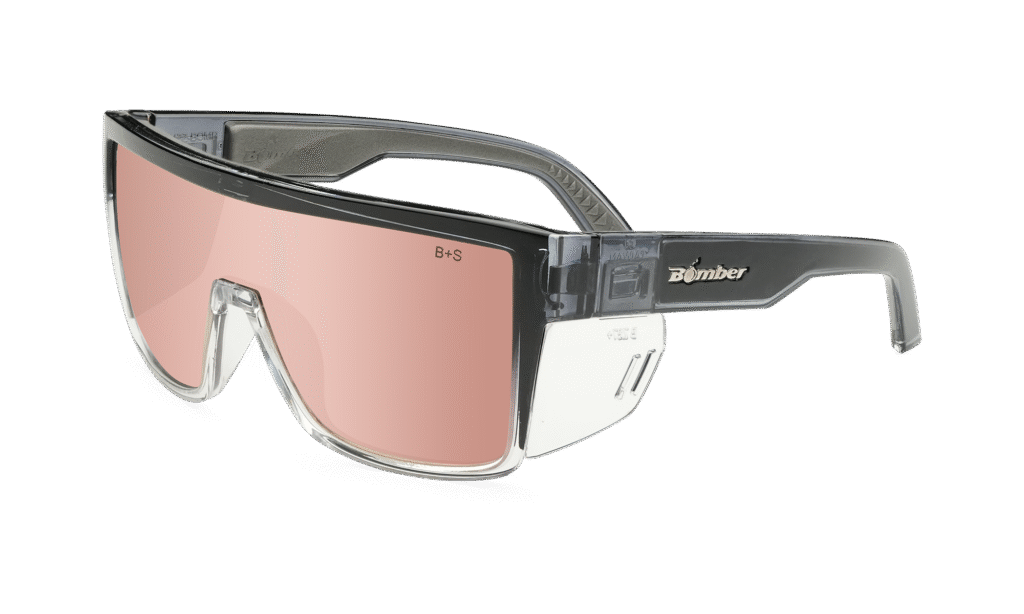
The world of smart glasses has undergone a remarkable transformation in recent years. Once considered a futuristic gadget from science fiction movies, smart glasses are now a growing market with enormous potential. Innovations from major technology companies and bold moves by smaller companies are revitalizing the segment and changing the way we experience technology in everyday life. This shift is evident in the explosive growth in sales and the variety of models offered.
Nowadays, not only well-known names like Ray-Ban Meta, Apple, and Google dominate the scene, but numerous lesser-known manufacturers are also emerging with innovative concepts. This blend of simplicity, affordability, and radical innovation is creating a completely new dynamic in the smart glasses sector. Market data indicates rapid adoption, and the future promises even greater technological leaps than previously expected.
The development history and variety of screenless smart glasses
The journey of so-called “screenless” smart glasses began back in 2013 with the startup innovation Epiphany Eyewear from Vergence Labs. Although these early models were rather simple and primarily characterized by a camera, they laid the foundation for later products. Snap adopted the concept and introduced the Spectacles, which were initially used for creative shots but offered only limited functionality for everyday use.
The path of this first generation was characterized by limited technical options: no speakers, no advanced AI features, and limited battery life. However, this allowed the idea of glasses that could do more than just provide vision to gain a foothold. Companies like Pivothead also attempted to market with similar products, but largely remained under the radar because the benefits for the masses were not yet clear.
A significant step forward came with Amazon’s Echo Frames, introduced in 2020. While they lacked a camera, they integrated microphones and speakers for using voice assistants like Alexa. This demonstrated that smart glasses could also be designed minimalistically without losing their intelligence. The combination of listening to music, making phone calls, and voice commands via glasses opened up new application possibilities, especially for everyday use.
Another milestone was Meta with its Ray-Ban Meta, which integrated multimodal AI in 2023. These smart glasses transformed from simple gadgets into intelligent companions that respond to voice commands and provide information in a context-based manner. Today, numerous manufacturers are in the race: From low-cost Chinese suppliers to innovative newcomers, they offer high-performance glasses with a wide range of AI integrations.
For example, Solo’s AirGo V2 combines a variety of well-known AI systems such as ChatGPT and Gemini to offer extensive support in a small space. Xiaomi focuses on the Chinese market with its in-house AI, while HTC targets developers with Vive Eagle and Mentra with an open SDK. Even in the field of discreet, cameraless, and highly technical smart glasses, there are bold concepts, as demonstrated by Waves with invisible cameras, despite the associated controversies.

Diversity in the German market: From Bosch Smartglasses to Vuzix
In Germany, the smart glasses landscape is gaining further definition thanks to companies like Bosch with its Bosch Smartglasses. Bosch focuses on functional models for industrial and professional applications, emphasizing comfort and robust technology. Vuzix, with a strong presence in Germany, also offers a variety of smart glasses for use in both private and professional contexts.
Eyewear manufacturer Rodenstock also combines proven optics with smart technology, while Zeiss Smart Glasses and Carl Zeiss Vision focus on excellent visual experiences and precise integration of digital functions. Similarly, Eschenbach Optik and Leica Eyecare are pursuing the path of connecting traditional eyewear manufacturers with the digital future, thus providing users with comfortable support in their everyday lives.
Fielmann Smart Glasses is positioning itself as one of the first major optical companies in the mass market with intelligent solutions that not only offer fashion but also provide access to digital information. O-Synce and MBition Smart Eyewear expand the spectrum with sports and mobility-enhancing functions, such as fitness tracking or voice-activated navigation.
Smart glasses with head-up displays (HUD): The next dimension of information
A crucial step in the evolution of smart glasses is the head-up display (HUD), which projects information directly into the field of vision. This concept revolutionizes the use of glasses by allowing the wearer to receive notifications, text, translations, or navigation instructions without the distraction of an additional display. North’s Focals brought this type of technology to the consumer market as early as 2019, but the project was discontinued after the acquisition by Google.
New players such as Even Realities and Brilliant Labs from Singapore have taken up the challenge and developed glasses that can display text in either monochrome or color. Even Realities’ G1 model impresses with binocular optics and the ability to display subtitles or scrolling text, which is particularly attractive for hearing-impaired users or multilingual users.
Brilliant Labs goes a step further with the Halo, which not only enables color projections but is also open source, giving developers the flexibility to create their own applications. XRAI, on the other hand, specializes in live translation, instantly displaying spoken language as text for the wearer—an innovation that particularly appeals to travelers and international businesspeople.
Inmo, a pioneering company in this field, relies on enhanced binocular color projection with its Go 2 and Air 3 models, which, despite their increased weight and price, offer impressive image quality. Even Amazon is planning its own HUD glasses, intended for both end consumers and professional users, such as parcel delivery workers. This development demonstrates that HUD glasses are increasingly becoming suitable for the mass market, as they make the digital flow of information seamless and unobtrusive.
Augmented Reality (AR) Glasses: The Leap to the Virtual World
While HUD glasses merely display information, augmented reality (AR) glasses go a step further: They integrate virtual objects into the real environment. This opens up entirely new usage possibilities, from navigation and gaming to complex work applications. Despite decades of research, however, lightweight, affordable, and everyday AR glasses for the mass market have hardly been introduced yet.
The Western market is still dominated by prototypes and cumbersome models, which often struggle with short battery life and high weight. In this context, RayNeo is trying to gain a foothold in China with the X3 Pro model. This offers impressive hardware, but the limited field of view represents a practical obstacle and significantly limits the immersive effect.
Snap, known for its Spectacles, is working intensively on AR glasses, which are expected to launch in 2026. Their unique feature lies in the combination of lightweight construction, autonomous operation, and an affordable price that is intended to appeal to a broad user base. After several development cycles, ranging from the camera glasses to the AR software SDK, Snap is on the verge of taking a major step toward a product suitable for everyday use.
The success of AR glasses depends enormously on technical integration, particularly on powerful and energy-efficient hardware, robust tracking, and smooth real-time image processing. Companies like Bosch Smartglasses and Vuzix in Germany are working in parallel to create practical benefits with AR solutions even in specialized sectors such as industrial environments or logistics.
The role of artificial intelligence as the driving force behind the smart glasses revolution
Artificial intelligence lies at the heart of most modern smart glasses and plays a key role in their performance and usability. With the advancement of language models, image recognition, and context-based data processing, the glasses are evolving from simple information devices to active companions that provide proactive support and adapt to the user’s habits.
This development is inextricably linked to the recent increase in sales, as Counterpoint’s “Global Smart Glasses Model Shipment Tracker” report shows: In the first half of 2025, an increase of more than 110% was recorded compared to the previous year. Particularly impressive are the leaps in growth in the area of embedded AI, which enables functions such as voice control, object recognition, and personalized information offerings.
For example, Meta’s implementation of multimodal AI in Ray-Ban’s Meta has reached a new level of performance by responding to different input channels and simplifying everyday life. Other manufacturers, such as Solo’s AirGo V2, combine multiple AI models to cover a wide range of use cases. Likewise, Mentra’s open platforms are tapping into developers who are developing entirely new apps and services for smart glasses.
Furthermore, companies like Carl Zeiss Vision and Leica Eyecare are increasingly investing in combining traditional optics with AI to ensure a seamless visual experience with enhanced functionality. The integration of artificial intelligence thus becomes a bridge between technical innovation and everyday usability for an entirely new class of devices that has the potential to profoundly change our perception and interactions.