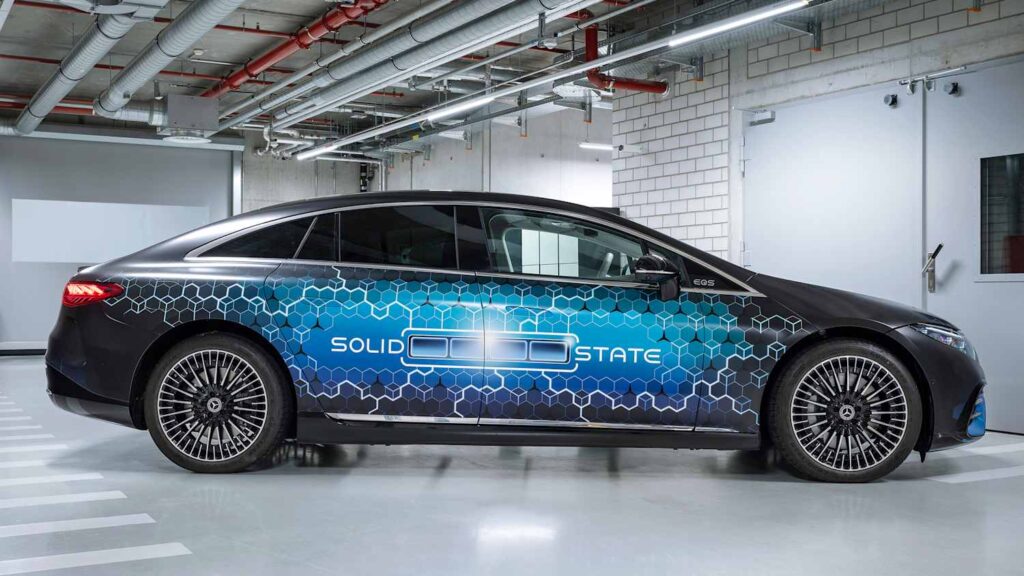
The development of solid-state batteries has heralded a new era in the automotive industry. While electric cars have so far been dominated by lithium-ion batteries, a technology is emerging on the horizon that has the potential to multiply driving ranges, drastically reduce charging times, and improve safety. Major players such as Volkswagen, BMW, Mercedes-Benz, Porsche, and Audi are following this progress with great interest, as solid-state batteries are seen as key to the widespread adoption of electromobility. In collaboration with industry giants such as BASF, Varta, Daimler, Siemens, and MAN, production capacities are being built and new manufacturing methods are being researched to achieve a breakthrough in series production before the end of this decade. The current start of small-scale series production of semi-solid-state battery cells by the Korean company SK On marks a significant step, making the introduction of this technology from 2029 a realistic prospect.
The technological revolution brought about by solid-state batteries in electric cars
Solid-state batteries are fundamentally different from conventional lithium-ion batteries, which use liquid electrolytes. Instead, solid-state batteries rely on solid electrolytes, which offers numerous advantages. First, the energy density increases significantly, allowing electric cars with comparable battery sizes to achieve a much greater range. In the case of SK One, the target energy density is initially 800 Wh/L, with the long-term goal of even reaching 1000 Wh/L. These figures significantly exceed many current lithium-ion batteries and theoretically allow ranges of over 1000 kilometers per charge.
Another key advantage concerns security. Due to their chemical composition, conventional batteries with liquid electrolytes pose a risk of overheating and fire. Solid-state technology reduces this risk due to the lower heat generation and the solid connection of the electrodes to the electrolytes. The improved material compositions and the innovative manufacturing process – including reduced resistance in the cells and optimized cell sealing – contribute to significantly higher thermal stability.
This technological development is being closely followed by automobile manufacturers and suppliers, including well-known companies such as Daimler and BASF. While Mercedes-Benz is already driving test vehicles and demonstrating the technical feasibility, companies such as Volkswagen, BMW and Porsche are working closely with battery cell manufacturers to prepare the solid-state battery for series production.
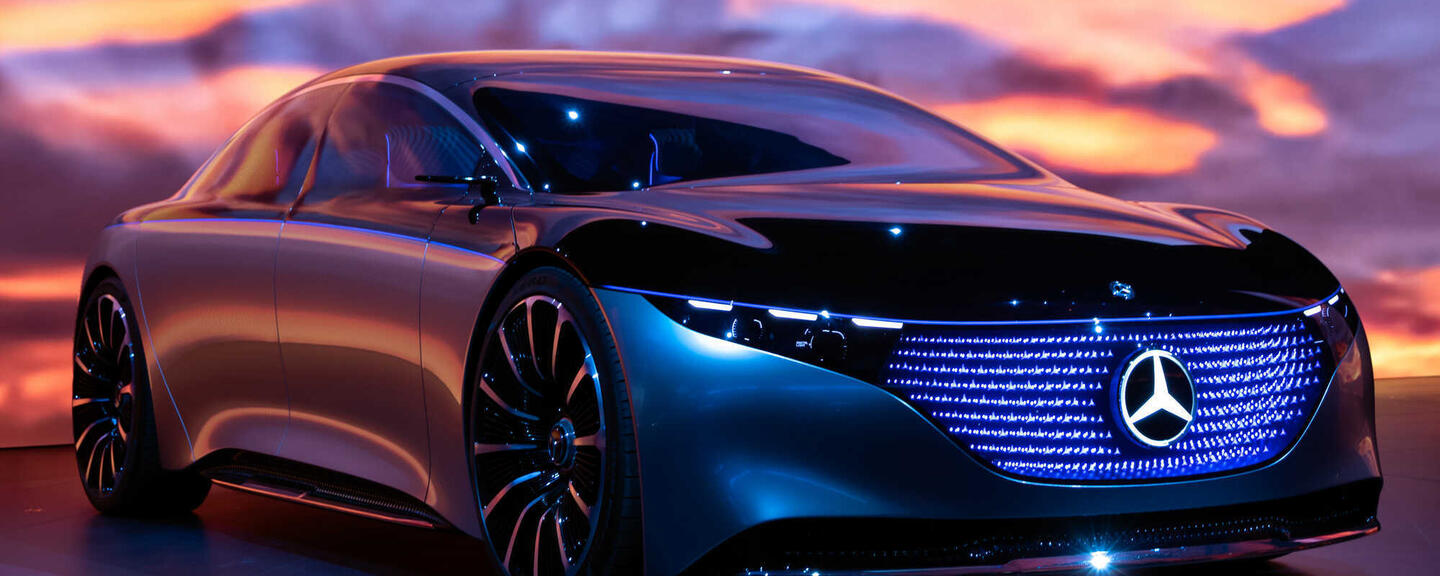
SK On and the role of semi-solid batteries in the transition to solid-state batteries
The company SK On, a subsidiary of the Korean industrial giant SK Innovation, is considered a pioneer in the production of batteries for electric vehicles. In 2025, the company began small-scale production of semi-solid battery cells in South Korea. This technology represents an intermediate stage between the previously common lithium-ion batteries and the fully developed solid-state batteries. It already enables higher power density and improved safety.
In close collaboration with the US specialist Solid Power, a novel production technology was developed. The cell sealing process is particularly complex and can only be mass-produced using special automation techniques. Through the modified mixture and innovative pressing of the cell materials, SK On was able to reduce the internal resistance of the batteries, resulting in a more stable and cooler cell temperature during operation.
This is particularly important for international automakers such as Hyundai, Kia, Nissan, and Ford, as they require high volumes of batteries that are both safe and durable. SK On already plans to offer solid-state batteries in mass production starting in 2029, bringing its original forecast forward by a year. This ambition sends a clear message to competitors such as the European manufacturers Volkswagen and BMW, for whom strategic battery development is also a high priority.
Impact on range, costs, and charging times for electric vehicles
The major advantage of the solid-state battery lies not only in the increase in range, but also in the improvement in charging times. Traditional lithium-ion batteries take hours to fully charge, while solid-state cells enable ultrafast charging cycles thanks to their greater stability and lower heat generation. Initial prototypes from manufacturers such as Porsche and Audi demonstrate charging times of less than 15 minutes for a range of several hundred kilometers.
This is crucial to dispelling long-standing concerns about the everyday suitability of electric cars. The improved energy density also enables smaller battery packs, which reduces weight and thus energy consumption and the price of the vehicle. Experts at Siemens and Varta confirm that cheaper production of the solid-state battery will lead to lower end-customer prices – a strong argument for the acceptance of electromobility in price segments previously excluded by the high cost of batteries.
Companies like MAN, which focus on commercial vehicles, are also watching the progress with great interest. Longer ranges and shorter charging times are crucial for the economic viability of electric trucks and buses in this segment as well. The combination of performance and economic efficiency will therefore position the solid-state battery as a key technology in the transition to zero-emission commercial vehicles.
Challenges and prospects for series production of the solid-state battery
Although the technological progress is impressive, manufacturers and suppliers face significant challenges in the industrialization of solid-state battery technology. The transition from laboratory samples to automated series production is complex and requires new machines, processes, and material qualities. SK On makes no secret of the fact that cell sealing represents one of the biggest technical hurdles in the current production process. Precise control of temperature, humidity, and pressure during cell sealing is crucial for the quality and longevity of the batteries.
The automotive industry is working closely with chemical companies like BASF to develop improved electrolytes with optimized conductivity. At the same time, simulation models and artificial intelligence are being used to accelerate production and minimize failure rates. The involvement of companies like Siemens also ensures that production lines reflect the latest state-of-the-art automation technology.
While Mercedes-Benz and Daimler are gaining important insights through pilot projects, market launch is primarily planned for the end of the decade. Until then, the race for the best solid-state battery technology remains exciting. The continued participation of manufacturers from Europe and Asia demonstrates how essential this development is for future mobility.