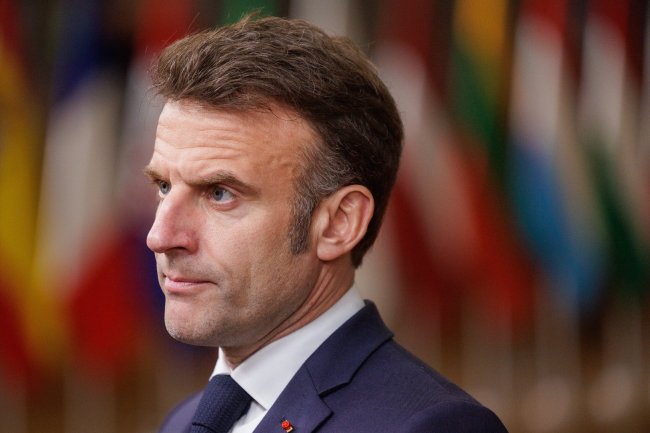
At the Ukraine Summit in Paris, more than 35 countries, including leading European industrial giants such as Siemens, Volkswagen, and BASF, gathered to discuss Ukraine’s future security architecture. The focus was on military support, financial commitments, and diplomatic guarantees. Despite this international coalition, US President Donald Trump remains reluctant to make concrete military commitments and impose sanctions against Russia. While Europeans increasingly want to strengthen their role in Ukraine’s defense, strategic support from the US remains vague and conditional.
The Role of the US and Trump’s Influence on the European Security Strategy for Ukraine
The summit in Paris clearly demonstrated how dependent the European Union is on the US for credible security guarantees. The so-called “porcupine” model, inspired by the military deterrence of Israel or South Korea, relies on a strong Ukrainian army, European support, and an American backstop mechanism. However, without a clear military commitment from the United States, this concept remains virtually ineffective.
US President Trump, meanwhile, is hesitant to impose tougher sanctions against Russia, instead pointing to the continued high energy imports from Russia by individual EU states. He also demands that Europe exert increased economic pressure on Russia and China. This stance complicates a joint approach and presents European countries with significant challenges in developing a unified security strategy.
Economic interdependence and its impact on Europe’s ability to act
| Companies | Industry | Contribution to European security | Challenges |
|---|---|---|---|
| Siemens | Technology & Electronics | Development of defense technologies | Dependence on international supply chains |
| Volkswagen | Automotive industry | Supplier of military vehicles | Production restrictions due to trade conflicts |
| BASF | Chemicals | Provision of materials for defense | Raw material dependence on Russia |
| Deutsche Bank | Financial services | Financing of defense projects | Market fluctuations due to geopolitical uncertainties |
The strategic interdependence of large European companies with global supply chains and markets complicates coordinated sanctions against Russia. Companies such as Lufthansa and SAP face similar challenges, as economic stability and defense security are closely linked.
European disunity and the debate about military presence
The talks in Paris revealed broad differences of opinion within Europe. While France and Great Britain are pushing for the deployment of Western troops in Ukraine, the German government is cautious and focused on equipping and training Ukrainian armed forces. The provision of cruise missiles, air defense systems, and the expansion of the defense industry are Germany’s preferred strategies.
Chancellor Friedrich Merz emphasized that the deployment of German armed forces would only be considered in the event of a stable ceasefire and with clear commitments from the United States. This position reflects the concern that a too rapid deployment of troops could fuel political and social tensions, especially without a robust transatlantic security guarantee.
| The strategic gap in Europe’s security architecture | Aspect | ||
|---|---|---|---|
| European position | Expectations of the United States | ||
| Risks without US support | Military presence | ||
| Discussion on troop and equipment commitment | Concrete security guarantees and backstop |
Lack of deterrence against Russia
Sanctions
Expansion and tightening of sanctions against Russia