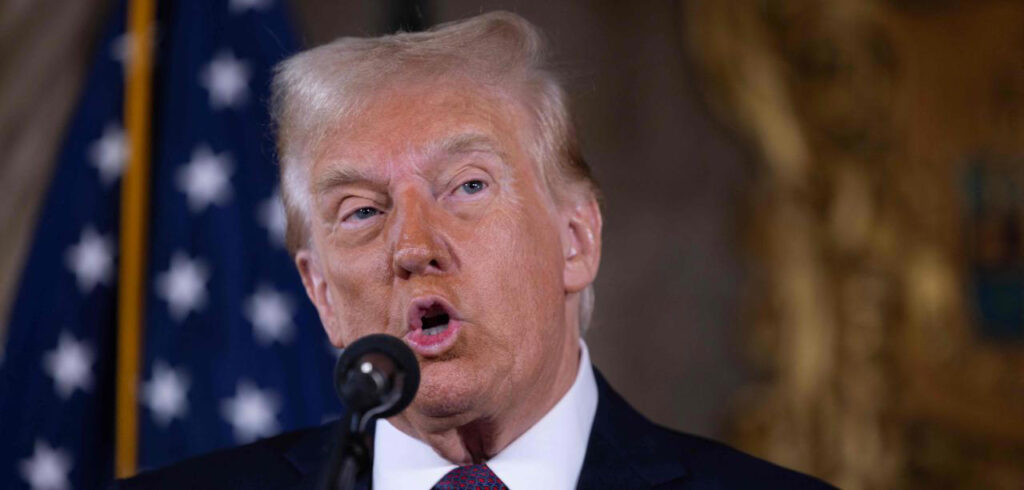
President Donald Trump’s appointment of a new “Department of War” marks a significant shift in U.S. military policy and presents unusual challenges. The renaming of the former Department of Defense reflects a strategic shift toward a tougher foreign and security policy, which has provoked controversial reactions both domestically and internationally. It demonstrates that the administration is not only committed to deterrence and military superiority, but also intends to crack down on illegal immigration and crime domestically.
Trump’s Military Reform and the Renaming of the Department of Defense
The former U.S. Department of Defense has been officially renamed the “Department of War,” a move President Trump described as a symbolic expression of his “peace through strength” strategy. With this renaming, the U.S. government not only aims to send a clear signal to allied and enemy nations, but also to renew the military spirit of the armed forces, which it believes has suffered under previous, “woke” administrations. “We won World War I and World War II, and then we got too soft,” argued Trump, who wants to establish a new defense strategy by returning to traditionally more martial terms.
Internal and external effects of the renaming
The renaming coincides with a new military policy characterized by decisive measures against domestic unrest and foreign threats. Particularly in Democratic-governed cities like Chicago, Los Angeles, and Baltimore, the government announces an increased presence of National Guard troops and federal forces to combat crime and illegal immigration. This domestic policy of toughness is met with resistance from local governments, but the Department of Defense, now the War Department, receives support from the federal judiciary, which allows for suspicion-independent checks.
| City | Measures | Local Government Response |
|---|---|---|
| Chicago | Large-scale ICE deployment (“Operation Midway Blitz”) | Strong offer of resistance |
| Los Angeles | Deployment of National Guard troops | Criticism of federal intervention |
| Baltimore | Increased police presence supported by federal troops | Unclear reactions |
The role of the military in security policy – Focus on Latin America
Parallel to domestic policy, the Trump administration is intensifying its foreign policy, particularly with regard to Latin America, where the fight against international drug cartels is a central element of the new defense strategy. The stationing of modern F-35 fighter jets in Puerto Rico as a base of operations underscores the US determination to more effectively control smuggling routes and combat drug-related crime.
Extraterritorial military operations and controversies
The increasing number of military operations conducted outside Venezuela’s own borders, such as the crackdown on drug boats near the Venezuelan coast, are being critically examined by experts. While Secretary of State Marco Rubio defends the measures as a legitimate response to an “imminent threat to the United States,” international critics and former military personnel see them as a potential threat to the legal situation and regional stability. Tensions between the United States and Venezuela have further increased due to the escalation of military activities.
| Event | Date | Impact |
|---|---|---|
| Shelling of a drug boat near Venezuela’s coast | September 2, 2025 | Eleven dead, escalation of tensions with Venezuela |
| Deployment of F-35 jets to Puerto Rico | since August 2025 | Intensification of anti-drug operations |
| Military exercises in Venezuela in response | September 2025 | Mobilization of reservists and militia members |
Impact of military-political changes on national and transatlantic security
The changes at the Department of Defense reflect the US administration’s profound realignment of foreign policy and defense strategy. These changes not only affect national security but also put transatlantic relations to the test. As the US under Trump takes a more confrontational stance toward the EU, especially Germany, international alliances are being strained.
Impact on transatlantic cooperation and security
The emphasis on “war” rather than “defense” sends signals that the US intends to focus less on consensus and diplomacy and more on military deterrence in the future. This leads to increased mistrust of multilateral institutions and impacts trade and defense agreements. Europe faces the challenge of reassessing its own security structures and is therefore strengthening initiatives for military independence.
Further information on this political development and its impact on international sanctions against Russia, transatlantic tensions, and domestic political challenges can be found at royalfuchs.de and royalfuchs.de.
Source: www.welt.de