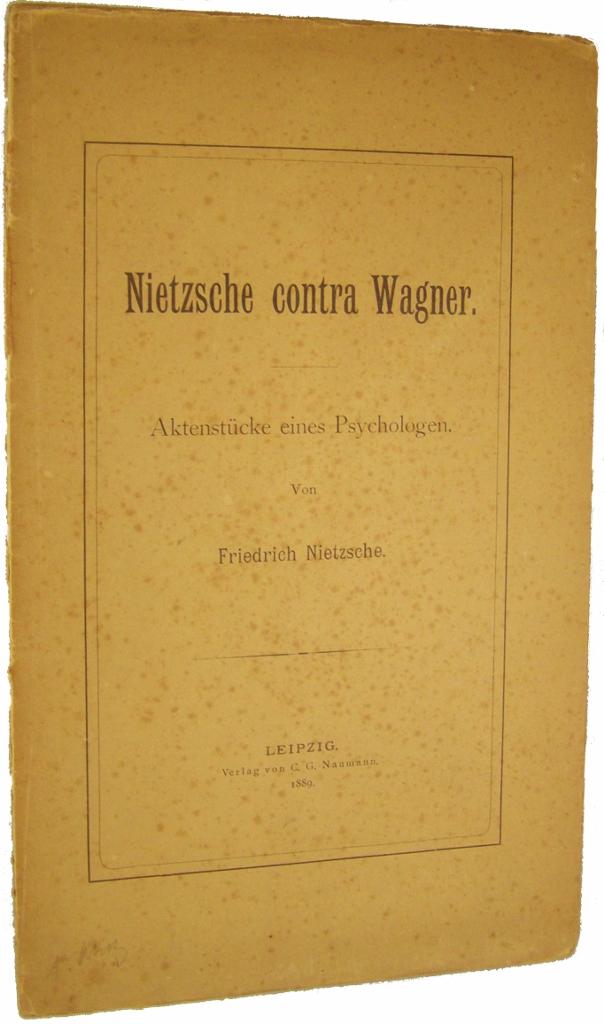
In the 19th century, cultural and intellectual turmoil prevailed in Europe, leading many thinkers and artists to search for new forms of expression and interpretations of meaning. Friedrich Nietzsche, then a young philosopher and passionate musician, found in the work of Richard Wagner not only artistic inspiration but also a vision for the spiritual renewal of Europe. Wagner, whose music dramas transcended traditional boundaries and created a profound connection between music, drama, and myth, embodied for Nietzsche a kind of new art religion in which the driving forces of Romanticism and the spirit flourished and religious feelings found a new home. This encounter of philosophy, music, and spirit was, for Nietzsche, a key to the revitalization of European cultural life, which he perceived as torn apart by modernity and the loss of faith.
The Significance of Wagner’s Music for Nietzsche and the Vision of Europe’s Cultural Renewal
For the young Nietzsche, music was not just an art form; it was an expression of profound psychological and spiritual forces. In Wagner’s music, he discovered a possibility of elevating European culture to a new level. Wagner saw himself as the creator of a Gesamtkunstwerk (total work of art) that united music, poetry, theater, and philosophy into a spiritual experience. Nietzsche saw in this ambition an opportunity to overcome the impending spiritual decline and the increasing alienation of people from their deeper emotions and beliefs.
For Nietzsche, Wagner’s operas were more than just pieces of music; they became symbols of a prophetic art that could touch and renew people. In his essay “The Birth of Tragedy from the Spirit of Music,” Nietzsche praised Wagner as the artist who revived ancient Greek culture in a modern form, thus creating a connection between music and philosophy. This reflected Nietzsche’s belief that true art must embody a transcendent spirit and open up a new reality.
At that time, a strong longing for transcendence and a higher meaning was evident, particularly in the Romantic era, and this longing also permeated Nietzsche’s philosophy. Romanticism had transformed art into the new “place of faith,” where feelings and states of mind were intensely experienced and expressed. Nietzsche, who grew up in a pastor’s family, himself had a complex relationship with religion, and it was precisely through Wagner that he found an artistic form that reimagined religious needs and made them adaptable for the modern age.
As a mediator of spiritual change and cultural renewal, music became an essential source of life for Nietzsche. He saw in it the potential not only to entertain but to transform a crisis-ridden society—a process that went far beyond mere entertainment and had a profound impact on the spiritual renewal of Europe. Nietzsche frequently described Wagner as the leading spirit of his time, whose work bore witness to a new era in which art partially replaced religion and satisfied people’s spiritual needs.
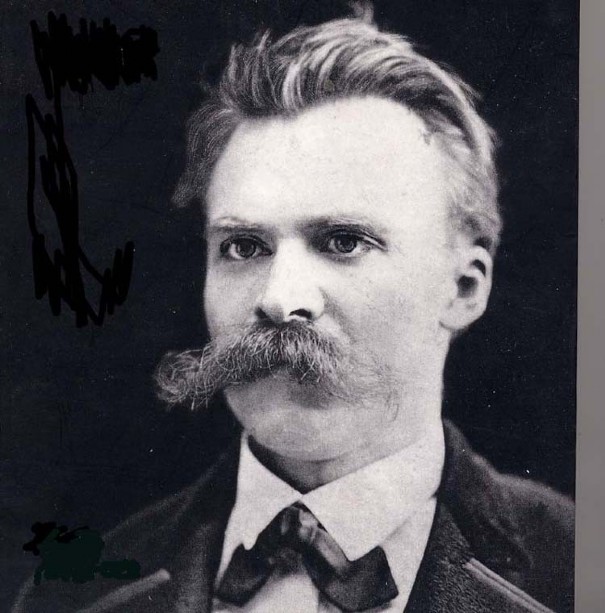
The “Starry Friendship” between Nietzsche and Wagner: From Genius to the Revelation of a New Spirituality
The relationship between Nietzsche and Wagner began in the 1860s and was characterized by intense admiration and a mutual need for intellectual exchange. Nietzsche saw Wagner not only as a musical master, but also as an intellectual pioneer for a new European renewal. Especially in their early years, they shared a so-called “starry friendship,” which Nietzsche poetically reflected in his work “The Gay Science.”
Nietzsche admired Wagner’s genius, which he considered uniquely creative and visionary. Wagner, for his part, sought in Nietzsche an intellectual who understood and affirmed his musical and cultural ambitions. This mutual complementarity lent their friendship an almost spiritual dimension. Wagner described Nietzsche as a “frustrated musician,” and Nietzsche saw himself as a “frustrated philologist”—both seemed to recognize in each other the consummate artistic and intellectual ideal.
The letters between the two testify to a deep emotional and intellectual bond in which they discussed their shared hopes for a renewal of European culture. Yet this connection was also marked by tensions and, ultimately, a disappointing rupture. Nietzsche began to critically examine Wagner’s work, already sensing the limitations of music as the sole source of intellectual renewal.
Nevertheless, the “Starry Friendship” remains a fascinating testament to the importance of music as a medium for spiritual awakening. In a time of profound social upheaval, this relationship was an expression of the desire to combine art and philosophy and thus create a new intellectual spirit, a new “spirit” in both senses of the word.
Philosophical Ideas and Musical Renewal: How Nietzsche’s Spirit Shines in the Context of Wagner’s Work
Nietzsche’s philosophy is characterized by a deep understanding of the power of art as a means of transforming humanity and society. His early writings, in particular, exhibit a close interweaving of musical and philosophical reflection, which is particularly evident in the influence of Wagner. Nietzsche was convinced that music is a language that transcends rational categories and directly touches the soul.
In “The Birth of Tragedy,” Nietzsche argues that ancient Greek drama represents a synthesis of the Apollonian and the Dionysian—two principles symbolic of order and intoxication, reason and passion. Wagner, according to Nietzsche, revitalized this duality and transformed it into his music dramas, creating a new form of spirituality. This spirit connects the sensual with the spiritual, Romantic enthusiasm with a transcendent disillusionment.
This conception goes far beyond mere musical analysis: For Nietzsche, music was a vehicle of transcendence, a medium that could break through the previous boundaries of knowledge and existence. Thus, Wagner’s work was not merely art, but a comprehensive intellectual project that would lead Europe to a new renaissance. Nietzsche saw in it an opportunity to overcome the looming decadence of modernity through creative power.
For Nietzsche, Wagner’s musical renewal was therefore a symbol of the intellectual awakening of an entire continent. It represented a bridge from old mythical worldviews to a new philosophy of life and the search for meaning. Works such as “The Ring of the Nibelung” were, for Nietzsche, reinforcing examples of such a synthesis, in which art and spirit enter into a new unity.
The Role of Romanticism and the Religion of Art in Nietzsche’s Understanding of Wagner’s Work
Romanticism as a cultural movement had a lasting impact on Nietzsche, as did his relationship with the religion of art that had emerged among the bourgeoisie at that time. During this period, art acquired a religious dimension that attracted many people, as traditional forms of belief had lost significance. Nietzsche recognized in this development a deep spiritual hunger, reflected especially in music and opera.
For Nietzsche, the religion of art was a response to the “cold” scientific nature of modernity and the dwindling trust in established religions. He saw Wagner’s operas as the fulfillment of this new religious longing. Wagner intertwined myth and music in such a way that works of art became spiritual experiences that touched on existential questions and conveyed a new affirmation of life. For Nietzsche, this connection was also a sign of how spirit and art could merge to create a transcendental meaning.
The religion of art, understood in this way, transcended aesthetic considerations and became, for Nietzsche, a means of renewing the European spirit. His observation that “art raises its head when religions decline” describes the fundamental change in the intellectual landscape of the time. Wagner’s music thus became part of a cultural movement that would fill the spiritual vacuum and lead Europe to a new spiritual flowering.
The tension between the romantic emotionality Nietzsche valued and the rational mind of the modern world provided the breeding ground for the intense reception of Wagner’s music and ideas. The musician Curt Paul Janz aptly summed it up when he classified Nietzsche as a “generally romantic” whose work and life were characterized by a deep longing for transcendence and inner meaning.
Nietzsche, Wagner, and the Importance of Music for the Emotional and Erotic Dimension of Life
In addition to the intellectual and philosophical dimension, music also had an intense emotional and even erotic component for Nietzsche. Despite his complicated love life, marked by loneliness and unfulfillment, music opened up a sphere of experience and sublimated passion. Music thus became a kind of substitute for deeper interpersonal experiences for Nietzsche.
In his private notes, Nietzsche once kept a personal “ranking” of the things that gave him pleasure. Musical improvisation was at the top of his list, followed by listening to Beethoven and Wagner. He ranked reflection on life and sensual desires below this. This ranking demonstrates how central music was to his joie de vivre and emotional balance.
Music thus served Nietzsche not only as an intellectual and spiritual experience, but also as a sensual gateway to his own inner world. It offered him a place where he could shape and experience feelings that often remained unfulfilled in his actual life. The emotional power of music, especially Wagner’s, proved to be an effective means of channeling drives and emotions.
Music thus took on a comprehensive meaning for Nietzsche: It combined philosophy, art, and emotion into a holistic experience that made life more intense and sensual. Thus, Nietzsche’s famous dictum, “Without music, life would be a mistake,” remains an expression of his deep conviction in the vital role of music for humanity.