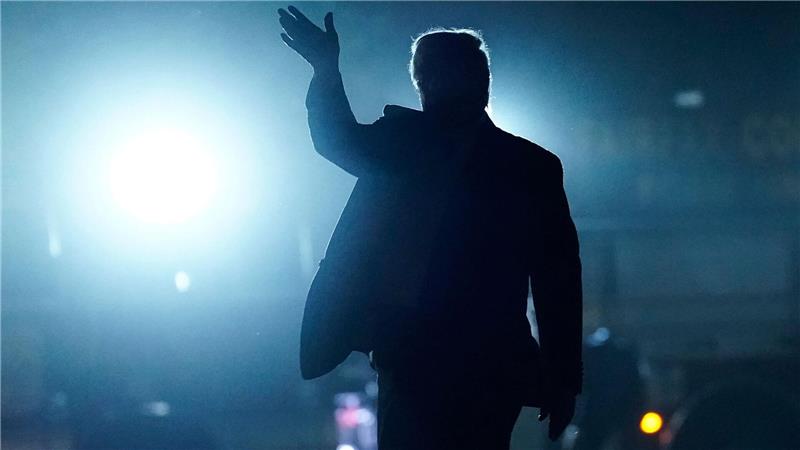
Former US President Donald Trump is once again in the spotlight after publicly exerting pressure on the US Department of Justice to pursue investigations into political rivals. His focus is particularly on prominent Democrats such as Senator Adam Schiff and Attorney General Letitia James. Trump’s actions raise fundamental questions about the rule of law and the potential politicization of the justice department, while the debate about abuse of power and corruption continues to dominate the US political landscape.
Trump and the call for investigations into political rivals
Donald Trump has made a public appeal to Attorney General Pam Bondi on his social media platform, raising concerns about the lack of action against his political opponents. He criticized the fact that, despite numerous reports and commentaries, no significant investigations have been initiated against California Senator Adam Schiff and New York Attorney General Letitia James. Both politicians belong to the Democratic Party and are considered central figures in the political resistance to Trump.
The background to these demands is the allegation that some politicians tampered with documents related to mortgage applications, a claim made by Trump’s ally Bill Pulte. Trump is insisting on officially opening investigations to limit the damage to the reputation and credibility of the Justice Department. This reflects a persistent persecution of rivals that increasingly combines campaign issues with legal action.
The impact on the independence of the U.S. Department of Justice
The public demand for judicial investigations against political opponents represents a clear encroachment on the independence of the judicial branch. Trump specifically criticized the previous stance of Attorney General Pam Bondi, who he claimed had not adequately complied with the pressure. Instead, he nominated Lindsey Halligan, a lawyer who had previously worked in the White House and represented Trump in previous legal disputes, as Bondi’s successor.
This appointment highlights the tendencies toward the politicization of the Department of Justice and raises significant questions about the rule of law, as the judiciary is increasingly being used as a tool to advance personal and political interests. The dismissal or appointment of prosecutors who oppose Trump supports this trend and places lasting strains on democratic institutions.
Trump’s accusations against former FBI director and political opponents
Also at the center of Trump’s criticism is former FBI director James Comey, who initiated investigations into possible Russian interference in the election campaign during Trump’s first term and was later dismissed. Trump has repeatedly accused Comey of lying to Congress and shows no willingness to treat the allegations against him impartially.
Trump also considers Adam Schiff guilty because he played a key role during Trump’s impeachment proceedings. Schiff, he claims, attempted to damage Trump politically by pushing forward investigations that ultimately did not lead to impeachment. These events illustrate how closely the judiciary and political rivalries are intertwined in the United States.
Impact on the rule of law and political culture in the United States
| Aspect | Description | Long-term consequences |
|---|---|---|
| Abuse of power | Trump’s influence on the judicial branch to prosecute political opponents | Weakening of the independent judiciary and loss of trust in state institutions |
| Politicization of the Judiciary | Appointment of loyal jurists as a strategy to reshape the department | Risk of instrumentalizing the judiciary for partisan political purposes |
| Corruption | Charges of alleged document falsification in the housing sector as a pretext | Increasing tensions between political camps and destabilization of the system |
The ongoing investigations and public debates surrounding corruption and abuse of power in connection with Trump’s actions not only have a direct impact on the U.S. Judiciary, but also significantly influence campaign issues and the political culture of the United States.
Trump’s use of the judiciary as a political tool reflects a disturbing development in the democratic landscape of the United States. It remains to be seen how courts and other independent bodies will respond to the pressure and whether the rule of law can maintain its protective mechanism.
Further information on the changes to the judiciary under Trump
Current developments involving US senators and Trump
Criticism of Trump’s handling of freedom of speech
Economic influences of political decisions
Financial controversies in the Trump administration
Source: www.spiegel.de